Changan Deepal S05 - Road Test Video
In full-electric form, the Changan Deepal S05 is a lower-mid-sized EV crossover you probably hadn't considered. Should you? Jonathan Crouch drives it.
Ten Second Review
Chinese maker Changan Deepal broadened its UK product line-up with this car, the S05. The full-EV version we look at here targets the volume lower mid-sized part of the electric crossover market and aims to offer something just a little bit different.
Background
The number five, we told, does in numerology represent adventure and change, both things intended to be encapsulated by this S05.
You'd be forgiven for not being familiar with Changan, one of China's biggest manufacturers - in fact it's the country's oldest car maker. The UK though, didn't see the marque until it launched here in 2025 with an upper-mid-sized EV model from its mildly up-market Deepal sub-brand, the Changan Deepal S07, which is a Tesla Model Y (& co)-targeted upper mid-sized EV.
As its name suggests, the Changan Deepal S05 is a size smaller than that car and in the full-electric form we primarily look at here, it's aimed at slightly more compact but still family-sized electric crossover models; think Skoda Enyaq or Volkswagen ID.4. Let's take a closer look.
Driving Experience
The S05 comes with a choice of two powertrains. A PHEV combustion package; or the full-electric version we look at here. The full-EV follows established practice for electric crossovers of this sort, with a two-tier powertrain offering. Most sales will be of the most affordable single motor RWD variant we're trying here which uses a 68.8kWh LFP (lithium-iron-phosphate) battery pack able to take the car up to 303 miles between charges. It energises a 262bhp motor on the rear axle and generates 290Nm of torque, though the high kerb weight limits the 0-62mph time to 7.5s en route to 112mph.
The full-EV alternative is the AWD twin motor model, which uses the same battery but increases power to 429bhp, improving the 0-62mph time to 5.5s, though range falls to 278 miles.
Other Chinese brands don't set the bar high in terms of ride and handling in this segment, but the S05 aims to offer an improvement in this regard, thanks to Europe-centric input from Changan's UK R&D centre in Birmingham. Despite that, you shouldn't expect this S05 to match the rest of its European rivals around the twisty stuff, something not helped by the prodigious 2.4-tonne kerb weight. As usual with Chinese cars, you'll probably come away from a drive feeling that a little more work is needed on the rather vague steering feel and the somewhat over-firm ride. The impact-absorbing five-link rear suspension copes with poor surfaces a little better at higher speeds and, helped by 5mm-thick frameless glass, cruising refinement is as quiet as you'd hope it would be.
Earlier, we mentioned the PHEV combustion version of this car; a bit on that before we finish. The S05 PHEV uses the company's latest 'Ultra Hybrid' technology, which sees a 1.5-litre four cylinder petrol engine paired with a permanent magnet synchronous rear-mounted electric motor, the two combined producing 254bhp. The motor is energised by an 18.4kWh lithium iron phosphate (LFP) battery offering an EV range of up to 62 miles.
Design and Build
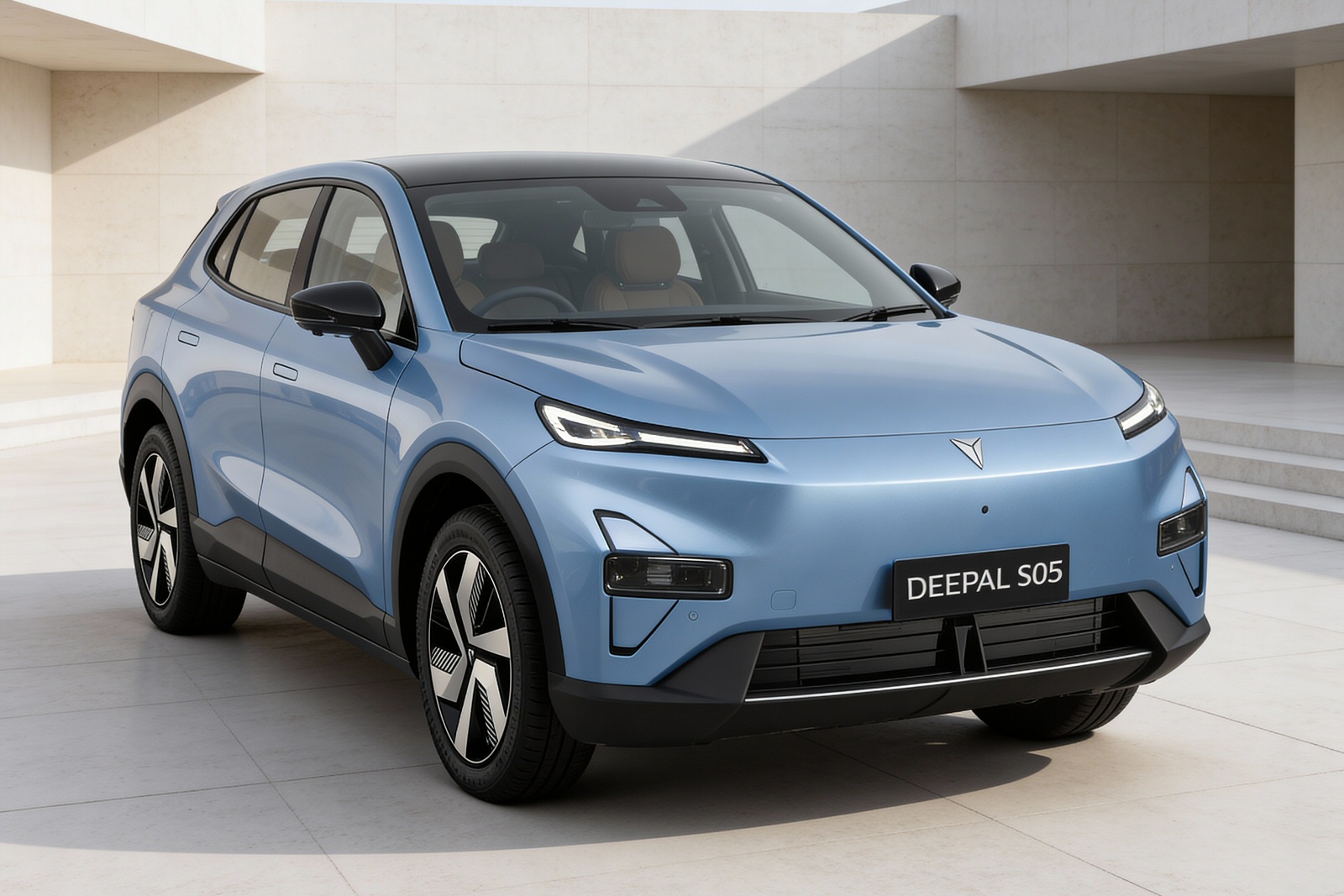
In the unlikely event you were already familiar with the Changan Deepal S07, you'd recognise this S05 as that car's slightly smaller stablemate. Mind you, at 4.6-metres long, it's not that much smaller and follows Changan's preference for producing cars a little bigger than the class norm. Slim LED headlamps and flush door handles are recognisable from the larger model, but the S05 goes without its contemporary's large front bumper air intakes in favour of a smoother look.
The side profile features a double waistline intended to mimic the aerodynamic silhouette of an aircraft fuselage. And the S05 rides on big 20-inch wheels. At the rear, a full-width LED taillight design derived from the shape of spacecraft wings and an illuminated Deepal logo are complemented by a high-mounted V-shaped spoiler with integrated brake light and an aero-optimised bumper diffuser.
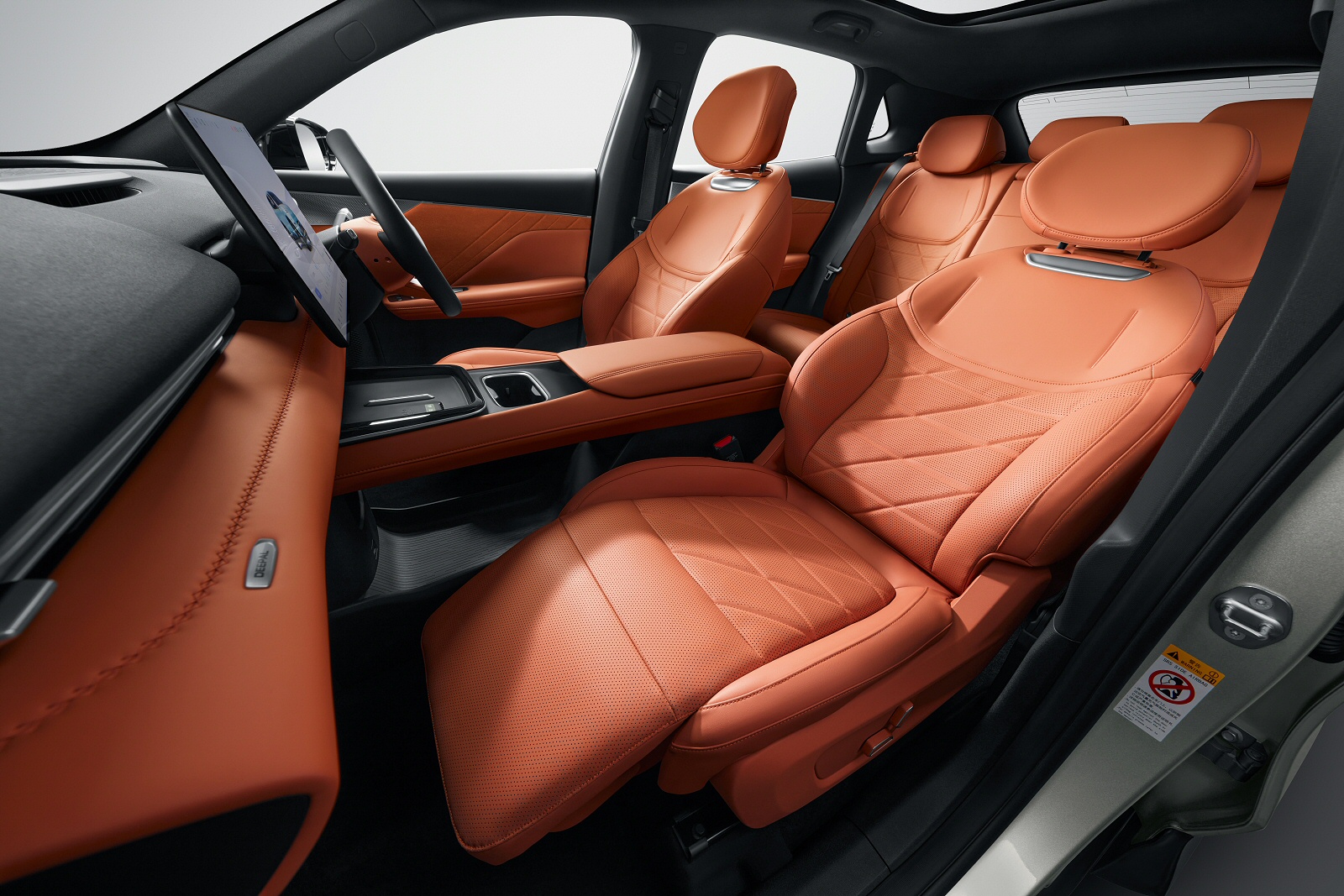
Inside, it's very nicely finished by the Thai factory - another thing that might really sell you this car. You'll have to be comfortable with buttons being banished, virtually everything located to the expected large 15.4-inch central touchscreen; not only climate control and music but things like wing mirror adjustment drive mode changes. There's no instrument screen; just a 50-inch augmented reality head-up display projected in front of the driver.
It's a very practical cabin, with over 30 cubbies provided for various things. And there's simply loads of standard kit, with a 14-speaker premium sound system, ventilated front seats, a panoramic camera system and synthetic leather upholstery that looks and feels a lot nicer than the Chinese norm. The rear seat is good for two adults, but a squash for three. And out back in the EV version, there's a 492-litre boot (60-litres smaller than the PHEV version but 47-litres bigger than that of the supposedly larger S07 model), plus a 159-litre under-bonnet 'frunk' for the charging leads. Push forward the 60:40-split backrest and up to 1,250-litres of space can be freed up in the EV.
Market and Model
For the S05 EV we're looking at here, think in terms of needing to pay from around £38,000 for the base RWD MAX version, just £2,000 less than the larger S07. You'll need around £40,000 for the twin motor AWD S05 variant. Advantageous for sales in the UK is the fact that some of Britain's biggest dealer groups will be selling this car. Changan Deepal launched here with 20 UK sites, with Lookers Star City in Birmingham its UK flagship centre. The brand says that a further 30 dealer sites will be added shortly nationwide, operated by well-known names like Ancaster, Parks, DM Keith and Stoneacre.
With both versions, you get plenty of standard kit for the asking figures, including 20-inch alloy wheels, a big 1.9m2 panoramic glass roof, a powered tailgate, power-folding mirrors, powered door handles and a heated windscreen. Inside, there's a 50-inch projected head-up display with augmented reality navigation, a 50W wireless 'phone charger, 64-colour dynamic ambient lighting, vegan upholstery, a heated steering wheel, heated and ventilated front seats, powered front seat adjustment and a 540-degree surround-view camera system. Media stuff's taken care of by a 15.4-inch central screen with wireless 'Apple CarPlay'/'Android Auto' and a premium 14-speaker audio system. A Vehicle-to-Load (V2L) function allows the Deepal S05 to supply up to 6kW of power to external devices.
Unlike most of its rivals, Changan doesn't ask any more for paint choice - there's five metallic colours to choose from. And two interior colour themes - black or orange. A tow bar is optional - for £600. Safety, Changan says, was a vital cornerstone of the Deepal S05's development. The vehicle has been awarded the highest possible, five-star Euro NCAP rating, scoring particularly highly for adult and child occupant protection. As standard, it is equipped with 17 intelligent driver assistance systems, enabling Level 2 autonomous driving, supported by a network of cameras, radars and ultrasonic sensors.
Cost of Ownership
Range efficiency for this S05 EV isn't anywhere near the class best - the AWD version is quoted at 4.0mpkWh. But unlike some Chinese cars of this kind, the DC charging speed isn't terrible - the S05 will charge up to 200kW. Though to give you some perspective, a Tesla Model Y charges at 250kW - and that car is no longer the fastest charger in the segment. The Deepal S05 can complete a 30-80% DC charge in 15 minutes. As for AC charging, well using a 7.4kW wallbox, a full charge would take around 11 hours. Which you could reduce to seven and a half hours with an 11kW three-phase supply. Usefully, there's an energy indication light provided on the C pillar.
You want peace of mind if you're buying into an unknown brand and Changan Deepal provides it with an impressive seven year / 100,000 mile warranty. Even the battery warranty is better than the class norm, at eight years / 124,000 miles. Expect to pay more for insurance than with rivals. Servicing intervals are every year or 12,427 miles (20,000km), depending on which comes first. Changan reckons this car will offer 'best-in-class' residual values; that's a brave prediction for an unknown Chinese brand - we'll have to wait and see. Insurance is rated at group 38D for the single motor RWD variant; and group 41D for the AWD twin motor model.
Summary
Changan certainly seems to be going about this the right way. Value pricing. An R&D base in the UK and a design house in Italy to try and make its products more European. And a product line-up primarily targeting the fastest-growing segment of the electric market, that for various types of mid-sized EV.
This Deepal S05 EV delivers most of what you get in the larger Deepal S07 model at a more accessible price, so will obviously be the stronger seller. Whether it will steal sales in any significant numbers from more established segment players has as much to do with Changan's fast-expanding UK dealer network as it does with the product itself. If those franchises get people into this car, it will sell. Whether it will sell enough for Changan's long-term ambitions here is another question.
| Changan Deepal S05 | ||
| Insurance group 1-50 | 38 - 41 | |
| Max Speed (mph) | 112 | |
| 0-62 mph (s) | 7.5 (RWD) - 5.5 (AWD) | |
| Electric WLTP-Rated Driving Range (miles) | 278 | |
| Length (mm) | 4620 | |
| Width (mm) | 1900 | |
| Height (mm) | 1600 | |
| Boot Capacity (l) | 492 | |
| Power (ps) | 262 (RWD) - 429 (AWD) | |
| Torque (lb ft) | 290 | |
| Compact Full Electric Cars | |
|---|---|
| Performance | 70% |
| Handling | 60% |
| Comfort | 70% |
| Space | 70% |
| Styling | 70% |
| Build | 70% |
| Value | 70% |
| Equipment | 80% |
| Economy | 60% |
| Depreciation | 60% |
| Insurance | 60% |
| Total | 67% |
.jpg)
.jpg)
.jpg)
.jpg)