
Video (preview)
THE i HAS IT (some text hidden) --NONE--
By Jonathan Crouch
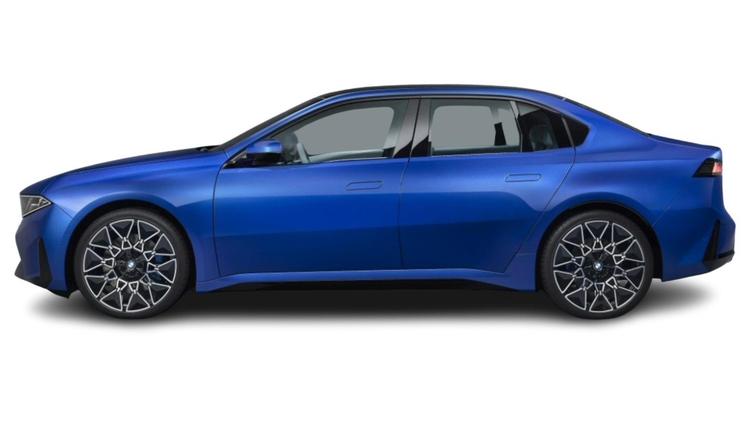
BMW's Neue Klasse i3 revolutionises what you can expect from a mid-sized premium electric sports saloon or estate. Jonathan Crouch tells you everything you need to know.
Ten Second Reviewword count: 56
Think about what a mid-sized premium electric car should be. If you're still wedded to combustion power, you might be struggling to meet those expectations - but BMW's new-era i3 just might. If you don't want an SUV in this class and you're looking for the current state of the art, you'll find it right here.
Backgroundword count: 250
EV car design needed a big step forward. BMW's Neue Klasse technology has provided it. First with the second generation iX3 SUV and then with this car, the new i3. We have to call it 'the new i3' because BMW fans will be well familiar with the original pioneering city car-shaped electric model that bore this same badge and was sold between 2013 and 2022. There was also an electric version of the G20-era combustion 3 Series bearing the 'i3' moniker, but that was sold only in China. Today's i3 though, is very different to anything that's gone before. Indeed, you could argue that it's significantly different from any EV that has gone before, unless you count the almost identically-engineered Neue Klasse iX3 model we mentioned earlier. That was a very important car for the Munich maker; but this one is the design the brand simply has to get right - the very first globally-available full-electric version of the model the company has built itself upon for five decades, the 3 Series. A bit like partner brand MINI did with the current Cooper hatch, the i3 will share much of its design language and technology with a separate but similar-looking combustion 3 Series. But in this case the car is BMW through and through - no joint ventures or Chinese collaborations. And it simply has to be good to face down new-era EV rivals like the Mercedes C-Class EQ and the forthcoming Audi A4 e-tron. Let's take a closer look.
Engines and Tech Specword count: 655
There's no doubt about the headline here from the twin motor 469hp xDrive50 version of this i3 that BMW's primarily concentrating on; the 559 mile driving range possible from its 108kWh nickel-manganese-cobalt battery, which at the time of this car's launch set a new standard for any EV sold in Europe. But if this car is going to sell as the brand wants it to, it'll also need more deep-rooted attributes. Over the years, what has attracted customers to the 3 Series more than perhaps any other thing is the car's primarily rear-driven handling purity. To duplicate that in an all-electric successor weighing 2.3-tonnes and propelled by a powertrain first designed for an SUV was something the Munich engineers puzzled long and hard over. Eventually, electronics came to the rescue, BMW's so-called 'Heart of Joy' processor unit, which bundles all of the car's handling systems together and works a bit like the conductor of an orchestra to mask that prodigious kerb weight. Fortunately though, the marque hasn't completely relied on software development to solve the inherent issues involved in making an EV handle like a well-sorted sports saloon, admitting that 'you can't cure driving behaviour with actuators'. Nor has the company simply clothed their iX3 differently, though as you'd expect, the two Nueue Klasse models do share the same powertrains (and the same wheelbase length). The differences between the two cars start in the i3 with the way the battery is sited lower in the Gen6 vehicle architecture; and continue with lower-profile tyres, softer springs, different anti-roll bars and a quicker steering ratio. What the i3 does share with the iX3 is the same virtually perfect 50:50 weight distribution. In terms of powertrains, as with the SUV there's an entry-level single motor rear-driven sDrive40 model. The focus though, is on the twin motor xDrive50 variant we mentioned earlier, which pairs a 322hp electrically-excited synchronous motor of the rear with a 165hp asynchronous motor at the front, the two developing a gutsy 645Nm of torque and demolishing the 0-62mph sprint in around 4.0s. Drive sound effects come via the brand's new Hyperson X soundscape, created specifically for the Neue Klasse. Exact performance will depend on your choice between the various available MyMode drive settings, which include Sport, Efficient and Silent and also incorporate a Personal mode that's configurable, offering bespoke adjustment of steering, drivetrain and regen settings. Ah yes, regen; as you'd expect, there are also brake energy recuperation options and if you set the regen correctly, you'll rarely ever need the brake pedal. Up to 98% of braking is handled by the electric motors, which have a regen system programmed to bring the car to a halt more smoothly than just about any other vehicle on the market, particularly if you choose the max-regen 'B' mode on the gear selector (unlike with many rivals, there are no regen paddles). Earlier, we mentioned the suspension; BMW has stuck with a heavily revised version of its usual passive steel-sprung set-up here. Though in this case, built in is a clever hydraulic rebound stop, which is designed to iron out harshness and make the ride feel more compliant. Another thing that will impress you behind the wheel is the way the brand has integrated its 'level 2-plus' ADAS drive assist systems. These use AI cameras to watch your movements and predict your intentions, rather than intervening blindly when you don't need them. The result is smoother and less intrusive operation, of the kind Chinese makers in particular really need to learn from, especially with things like adaptive cruise control and automated lane changing. This is helped by the 'Heart of Joy' processor's four 'super brains', which provide up to 20 times more processing power than conventional control units. Other i3 variants are planned, including a top iM3 flagship performance version, with four electric motors generating around 1,000hp, energised by a high-performance battery pack developed specifically by BMW M.
To see the full road test text contact us on 0330 0020 227
Pictures (high res disabled)
.jpg)
|
.jpg)
|
Statistics (subset of data only)
Min |
Max |
|
Price: |
£50,000.00 (At 27 Mar 2026, est) |
£60,000.00 (At 27 Mar 2026, xDrive50) |
Max Speed (mph): |
130 (xDrive50) |
|
0-62 mph (s): |
4 (xDrive50) |
|
Electric WLTP-Rated Driving Range (miles): |
559 |
|
Length (mm): |
4760 |
|
Width (mm): |
1865 |
|
Height (mm): |
1480 |
|
Boot Capacity (l): |
500 |
|