
E-INTER STELLAR? (some text hidden) --NONE--
By Jonathan Crouch
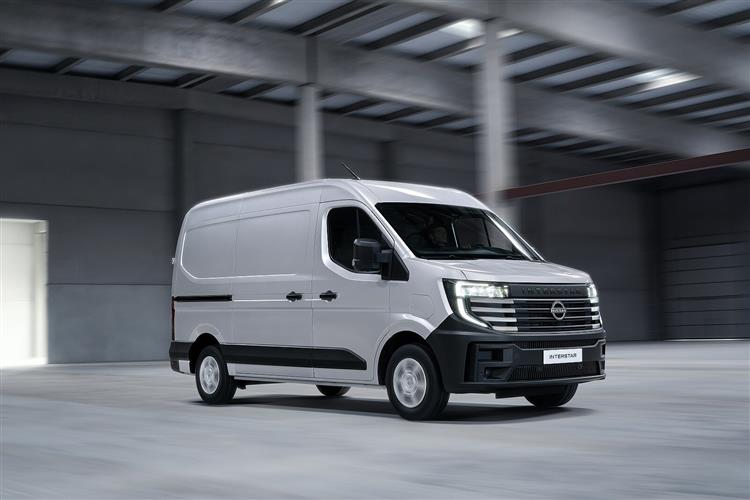
The Interstar, Nissan's biggest van, now comes as an EV. Jonathan Crouch drives the Interstar-e.
Ten Second Reviewword count: 35
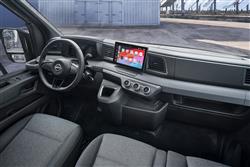
Nissan's largest van, the re-invented Interstar, looks a strong prospect in this full-electric Interstar-e form. It has a sharp look, a smartly designed cabin and an impressive level of media connectivity and drive assist features.
Backgroundword count: 153
The last part of the LCV market likely to go full-electric is that for really large vans. But that day will come a lot sooner once the products available improve - which is happening bit by bit, as evidenced by the model we look at here, Nissan's Interstar-e. A bit of background first. Initially, the large segment electric vans that first appeared at the end of the last decade really weren't very good at all. The very first of these was the Renault Master E-Tech, but so poor was that French model's EV driving range that the electric version of its clone, the Nissan Interstar, never appeared. Fast forward to 2024 though and things were very different. The electric version of the new generation Renault Master was a vastly more competitive proposition and Nissan has embraced it wholeheartedly to create the model we look at here, the Interstar-e. Let's take a closer look.
Driving Experienceword count: 276
From launch here, this EV variant was offered with the option of a smaller 40kWh battery, but Nissan's now discontinued that because it turned out that everyone wanted the more usable 87kWh battery we're trying here, which is rated at up to 285 miles between charges and is paired with a 143bhp motor developing 300Nm of pulling power. You'll need to restrain yourself from using all of that torque if you're to get anywhere near the EV mileage figure we just quoted. To manage that, you're also going to have to virtually always engage a provided 'ECO' button on the dashboard (which dampens throttle response considerably); and make sure you always engage the 'B' regenerative drive format via this gearchange stalk behind the wheel. Regen braking in the Insterstar-e works via a clever power-assisted 'one-box' dynamic braking control system that keeps braking effectiveness and pedal feel the same, regardless of how much weight the van is carrying. It also triggers the automatic emergency braking system sooner (response time has been halved over the old model) and enhances the harvesting of regenerative energy, theoretically extending the range of this electric version. In city streets, we found all-round visibility to be good for a large van of this size. The squared-off front end makes it easy to work out where the extremities lie, helped by a parking sensor system that, interestingly, can be had with three different sound formats - 'Pure', 'Accurate' and 'Expressive'. The shorter wheelbase and redesigned front axle of this second generation design provide for extra manoeuvrability, including a 1.5-metre-shorter turning diameter, now rated at 12.8-metres for the L2 and 14.6-metres for this L3 version.
To see the full road test text contact us on 0330 0020 227
Pictures (high res disabled)
.jpg)
|
.jpg)
|
.jpg)
| |||
.jpg)
|
.jpg)
|
.jpg)
| |||
.jpg)
|
.jpg)
|
.jpg)
| |||
|
Statistics (subset of data only)
Min |
Max |
|
Price: |
£43,090.00 (At 18 Nov 2025, L2H2 Acenta ex VAT ex PiVG) |
£44,390.00 (At 18 Nov 2025, L3H2 Tekna ex VAT ex PiVG) |
Electric WLTP-Rated Driving Range (miles): |
285 |
|
Load Volume (l): |
11 |
13 |
Payload Capacity (l): |
1197 |
1694 |
Power (ps): |
143 |
|
Torque (lb ft): |
300 |
|
Scoring (subset of scores)
Category: Vans
| Performance | |
| Handling | |
| Comfort | |
| Space | |
| Styling, Build, Value, Equipment, Depreciation, Handling, Insurance and Total scores are available with our full data feed. | |