
VALUE MODE (some text hidden) --NONE--
By Jonathan Crouch
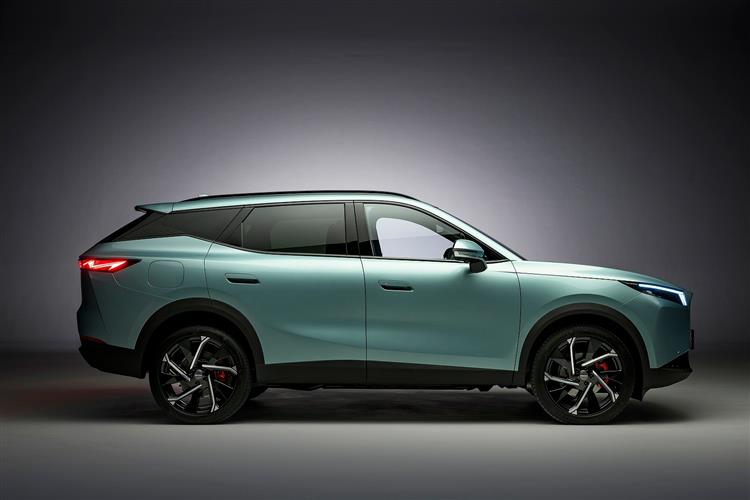
The Omoda 7 might be the aspirational family-sized SUV you thought you couldn't afford. Jonathan Crouch drives it.
Ten Second Reviewword count: 39
The Omoda 7 widens this Chinese brand's offering by targeting customers looking for an ambitious mid-sized SUV. Value, frugality and comfort are the keynotes here - with a dash of Omoda-style fashion. And the option of Plug-in Hybrid power.
Backgroundword count: 107
Our market is being flooded with new Chinese brands, but their products will remain small segment players until they really are engineered for the European market. Some Oriental makers are getting this message quicker than others and one of them is Omoda - specifically with this car, the Omoda 7. Like its Chinese contemporaries, Omoda launched into our market (with the compact Omoda 5 in 2024) selling a re-badged Chinese model with some token Europeanisation (in that case via parent group Chery's European development centre in Raunheim). In contrast, the Omoda 7 mid-sized SUV we look at here is the marque's first vehicle developed specifically for export.
Driving Experienceword count: 287
Ownership conglomerate Chery has directed Omoda to offer the '7' here with two engines. The entry-level option is the brand's usual 1.6-litre TGDI petrol unit, which offers 147PS and 275Nm of torque, making 62mph in 10.4s en route to 118mph. The alternative is to have your Omoda 7 in Plug-in Hybrid form with what the group likes to call its 'SHS', or 'Super Hybrid System'. The name suggests something quite revolutionary but actually, the projected EV range here - about 56 miles - isn't even quite as good as VW Group rivals (though it's better than competing Stellantis Group models). The drivetrain is the same as that used by the Chery Group's Jaecoo 7 SHS (and PHEV versions of the Chery Tiggo 7 and Tiggo 8), which means there's a 1.5-litre petrol engine mated to an electric motor energised by an 18.3kWh battery. This SHS model only comes in 2WD form but does have its share of clever tech, using the engine and brake regen system to always keep the battery above 0% of charge. So even if you forget (or aren't able) to plug in, you'll still find the car reverting to electric motion around town. Though the petrol engine in this PHEV is at 1.5-litres slightly smaller than the 1.6-litre unit used in the conventional models, the SHS system's total output is of course superior, rated at 204PS, with 365Nm of torque; enough to get the car to 62mph in 8.4s en route to 112mph. The car always starts under EV power and you can drive in pure electric mode up to motorway speeds - or with the engine and motor working together in unison. When the engine cuts in, it does so pretty seamlessly.
To see the full road test text contact us on 0330 0020 227
Pictures (high res disabled)
.jpg)
|
.jpg)
|
.jpg)
| |||
.jpg)
|
.jpg)
|
|
Statistics (subset of data only)
Min |
Max |
|
Price: |
£29,965.00 (At 13 Jul 2026, TGDI Knight) |
£35,505.00 (At 13 Jul 2026, SHS NobleTech) |
CO2 (g/km): |
168 (TGDI) |
23 (SHS) |
Max Speed (mph): |
118 (TGDI) |
112 (SHS) |
0-62 mph (s): |
10.4 (TGDI) |
8.4 (SHS) |
Electric WLTP-Rated Driving Range (miles): |
56 |
|
Combined Mpg: |
31.2 (TGDI) |
|
Length (mm): |
4660 |
|
Width (mm): |
1875 |
|
Height (mm): |
1670 |
|
... and 3 other stats available | ||
Scoring (subset of scores)
Category: Hybrid, Plug-in, Electric & Hydrogen
| Performance | |
| Handling | |
| Comfort | |
| Space | |
| Styling, Build, Value, Equipment, Depreciation, Handling, Insurance and Total scores are available with our full data feed. | |