
FIVE COMES ALIVE (some text hidden) --NONE--
By Jonathan Crouch
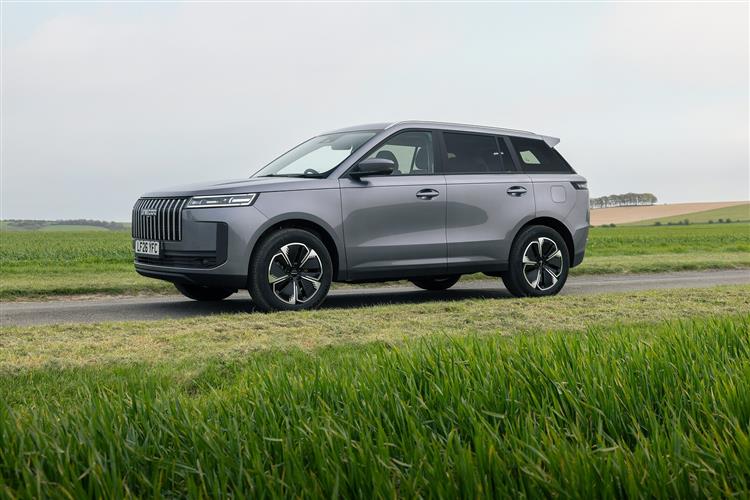
The SHS-H Hybrid drivetrain is the one to have with the Jaecoo 5 compact SUV, thinks Jonathan Crouch.
Ten Second Reviewword count: 52
Jaecoo's first small Hybrid, the Jaecoo 5 SHS-H, should find plenty of takers in our market. It doesn't have the most efficient powertrain of this sort, but it's efficient enough for most to bridge the gap between old fashioned combustion power and the full-EV revolution. And it'll stand out on your driveway.
Backgroundword count: 123
Having startled the market with the sales success of its mid-sized models, Jaecoo had high hopes for the fortunes of its more compact SUV, the Jaecoo 5, which was launched in 2025. What this car really needed though, it didn't have at launch - but has now; a full-Hybrid engine. Which is probably what you'll want if you're temped by the look and the value proposition of a Jaecoo 5. After all, the alternatives are either a notably inefficient base petrol version. Or a somewhat less visually striking all-electric E5 variant. For most customers, this SHS-H Hybrid delivers all the electrification they really need, without all the hassles of the EV revolution. So how does it stack up? Let's take a closer look.
Driving Experienceword count: 212
The SHS-H 'Super Hybrid System - Hybrid' set-up in use here is much like the one used by the Omoda 5 SHS-S. Which means that it comes from parent group Chery's parts shelf and pairs a turbocharged 1.5-litre four cylinder petrol engine with a compact electric motor energised by tiny 1.83kWh battery pack. Some rivals in the segment (the Nissan Qashqai e-Power for instance) work as 'series Hybrids', with drive offered only by an electric motor, the engine provided solely to generate energy for the battery. This Jaecoo 5 uses a more conventional Toyota-style full-Hybrid system with the engine and motor working in tandem to power the front wheels. That power works through the Cherry Group's own three-speed 'DHT' auto gearbox ('Dedicated Hybrid Transmission') optimised to work with petrol/electric powertrains. Combined power output is rated at 224PS (considerably more than the 147PS of the base petrol model), with 0-62mph requiring 7.9s en route to 108mph. Handling was developed in Europe and benchmarked against what the brand sees as this car's closest rival the Hyundai Kona. The suspension, steering and anti-roll bars have all been re-tuned over the Chinese market model to cater for differing European tastes. Don't expect cutting-edge handling or particularly feelsome steering but the drive dynamics are reasonably class competitive.
To see the full road test text contact us on 0330 0020 227
Pictures (high res disabled)
(3).jpg)
|
.jpg)
|
.jpg)
| |||
.jpg)
|
.jpg)
|
.jpg)
| |||
|
Statistics (subset of data only)
Min |
Max |
|
Price: |
£26,270.00 (At 8 May 2026) |
£29,765.00 (At 8 May 2026) |
CO2 (g/km): |
120 |
|
Max Speed (mph): |
108 |
|
0-62 mph (s): |
7.9 |
|
Length (mm): |
4380 |
|
Width (mm): |
1860 |
|
Height (mm): |
1650 |
|
Boot Capacity (l): |
380 |
|
Scoring (subset of scores)
Category: Crossover or SUV 4x4s
| Performance | |
| Handling | |
| Comfort | |
| Space | |
| Styling, Build, Value, Equipment, Depreciation, Handling, Insurance and Total scores are available with our full data feed. | |