
THE JOYS OF SPRING (some text hidden) --NONE--
By Jonathan Crouch
If you ignored the MK1 Dacia Spring EV citycar, take a fresh look at this second generation version, advises Jonathan Crouch.
Ten Second Reviewword count: 49
In second-generation form, the Dacia Spring is a much more credible attempt at the budget EV citycar genre. The not quite as cheap as its predecessor, it's still one of the most affordable small cars you can buy and has benefited hugely from a switch to Renault Twingo-based underpinnings.
Backgroundword count: 221
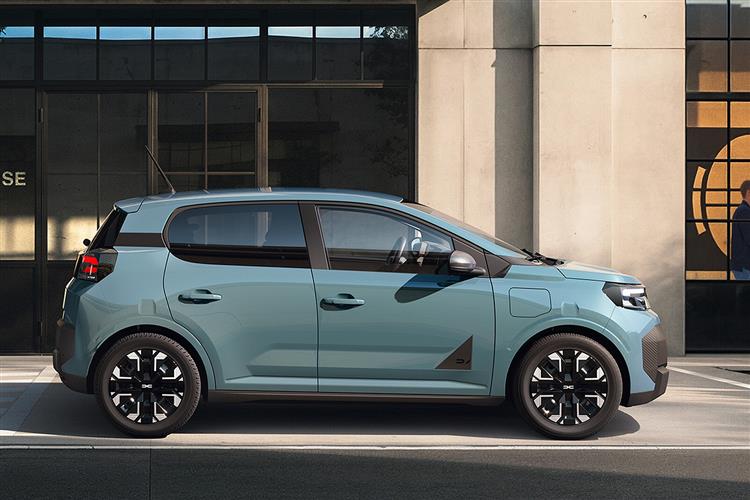
Dacia is now building more credible cars, not just cheap ones. The original version of the brand's tiny Spring EV citycar was certainly cheap - in fact it was Britain's most affordable new car - but still not many people wanted one. But that might change with this, the second generation version. The first generation Spring was launched in its earliest form back in 2021, an awkward-looking spindly-wheeled little thing. The British importers wisely waited a year until it was facelifted with a few extra safety features added before offering it here. In 2024, the previously feeble electric motor output was boosted and a more robust LFP battery offered, but the car was still rated only at around 140 miles of range. Those updates allowed Dacia to amass 210,000 MK1 model sales, though the Spring remained a relatively rare sight here. But that might change with the introduction of this MK2 model. It's 50% more expensive, but because it's now European-made rather than Chinese-built, a lot of that price increase can be potentially be covered by a government grant. It carries over only its name from its predecessor, with everything you can't see based on the Renault Twingo (and a Nissan model, the Pixo). But it's a more sensible kind of EV citycar than that Renault. Let's take a closer look.
Engines and Tech Specword count: 260
Whenever a car maker starts an engineering brief on a new model with an estimate of how far a typical owner travels in a day, you know that the EV range of the vehicle in question will be somewhat restricted. In the case of the Spring, the daily average according to Dacia is just 13 miles. Which is just as well because the first generation model never managed more than an official 140 mile reading (and in harder real-world driving often struggled to make three figures). If you'd hoped that this second generation model would do significantly better (or at least match the 165 mile figure of its most obvious budget priced rival, the Leapmotor T03) you're going to be disappointed because the Twingo-based 'RGEV Small' platform underpinnings don't allow for a battery very differently sized from the one fitted to the previous generation model. It's an LFP pack with a 27.5kWh capacity (the MK1 Spring used a 24.3kWh pack) and the WLTP-rated range is 155 miles. That's 8 miles less than the Twingo but 16 miles up on the first generation Spring. That original model got a motor upgrade in 2024 and a similar 80bhp output is carried over here, the front axle unit powering the car to 62mph in 12.1s en route to the very modest top speed of 81mph. You can expect the bigger, wider wheels and more planted stance to make this new generation Spring much more stable through the corners. And Dacia has worked on ride and refinement too, to better match the class standard.
To see the full road test text contact us on 0330 0020 227
Pictures (high res disabled)
.jpg)
|
.jpg)
|
.jpg)
| |||
.jpg)
|
.jpg)
|
.jpg)
| |||
.jpg)
|
.jpg)
|
.jpg)
| |||
.jpg)
|
.jpg)
|
.jpg)
| |||
.jpg)
|
.jpg)
|
.jpg)
| |||
|
Statistics (subset of data only)
Min |
Max |
|
Price: |
£18,000.00 (At 25 Sep 2026, est) |
£20,000.00 (At 25 Sep 2026, exc ECG) |
Max Speed (mph): |
81 |
|
0-62 mph (s): |
12.1 |
|
Electric WLTP-Rated Driving Range (miles): |
155 |
|
Length (mm): |
3850 |
|
Width (mm): |
1740 |
|
Height (mm): |
1490 |
|
Boot Capacity (l): |
337 |
|
Power (ps): |
80 |
|