
TRAFIC CALMING (some text hidden) --NONE--
By Jonathan Crouch
Renault's Trafic van goes to the next electric level. Jonathan Crouch takes a look.
Ten Second Reviewword count: 39
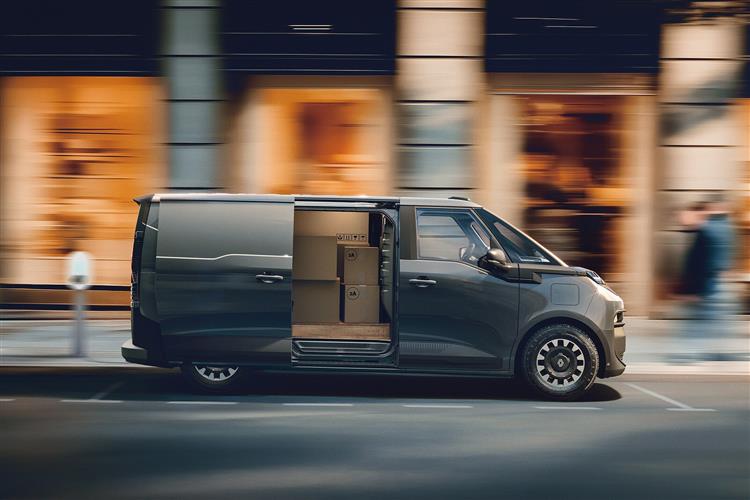
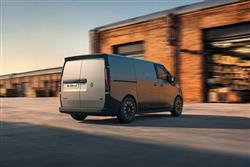
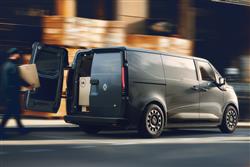
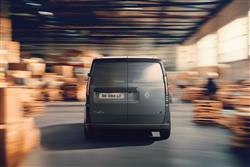
Historically, Renault's Trafic mid-sized van has never really been a class leader. But this fourth generation version very much is, launched in full-electric E-Tech form with cutting-edge technology that claims to redefine what a mid-sized electric van can be.
Backgroundword count: 245
What will the van of tomorrow be like? Electric obviously. And an electric van that will charge faster, go further and anticipate business needs before they happen. And that description, Renault promises, perfectly fits this LCV, the Trafic E-Tech electric. First launched in 1980, the Trafic is a mid-sized van that has been built in over 2.5 million units across three generations. The MK4 version launches in this full-electric form - that being (for the moment) the only form you can get it in. The old MK3 diesel model has been lightly updated to continue for some time yet. This isn't the first all-electric version of the Trafic we've had. The MK3 model spawned a EV variant in 2023 towards the end of its production run - a stop-gap variant very few companies bothered with. Rightly as it turns out because the French maker was working on something much better. And with this fourth-generation Trafic, instead of EV power being an after-thought, it's what leads out the line-up. It's introduced as Europe's first 'software-derived' van, which means the entire van (rather than, as before, only parts of it) can be updated over the air, with the potemtial for different extra features to be added in as you own it. And this MK4 Trafic E-Tech is also one of the very first full-electric LCVs with an ultra-rapid charging 800V electrical infrastructure. In short, in many ways, an entirely new generation of EV vans starts right here.
Engines and Tech Specword count: 230
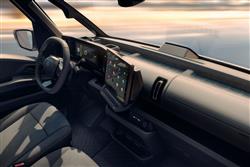
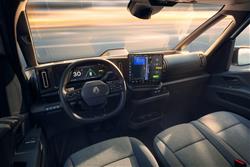
All Trafic E-Tech models are propelled by the same 201bhp motor, which offers a useful 345Nm of torque. The two batteries operators have to choose from though, are quite different. For those engaged in urban or suburban deliveries, there's a 60kWh lithium-iron-phosphate pack offering around 220 miles of range. But most are likely to want the alternative 81kWh nickel-manganese-cobalt battery, which has a claimed W LTP range of up to 292 miles - or up to 429 miles in city driving, thanks to an average energy consumption of 17.2kWh/100km. Renault says city driving is this Trafic E-Tech's forte thanks to light steering, supple multi-link rear suspension, a tight 10.3m turning circle (about the same as a Clio supermini) and a car park-friendly 1.9m roof height. For the highway, high levels of sound deadening should aid refinement. And on the twisty stuff, the stiffer new SDV platform should keep body roll in check. If you didn't think electric vans could tow very much, you might be surprised by the towing capacity figure of up to 2-tonnes, though if you were to exercise that, it'd probably decimate your driving range. The driving position's good, though you might find that the double A-pillar gets in the way a little at junctions. Where navigation is fitted, there's an LCV-specific function that diverts you from unsuitable routes, taking into account the vehicle's size and load.
To see the full road test text contact us on 0330 0020 227
Pictures (high res disabled)
|
|
| |||

|
|
| |||
|
|

| |||
|
Statistics (subset of data only)
Min |
Max |
|
Price: |
£41,715.00 (At 13 Nov 2026, inc. 5,000 PiVG) |
£50,715.00 (At 13 Nov 2026, inc. 5,000 PiVG) |
Electric WLTP-Rated Driving Range (miles): |
220 |
|
Length (mm): |
4870 |
|
Width (mm): |
1920 |
|
Height (mm): |
1890 |
|
Load Volume (l): |
5 |
6 |
Payload Capacity (l): |
2000 |
|
Power (ps): |
201 |
|
Torque (lb ft): |
345 |
|