
BETTER BADGE ENGINEERING (some text hidden) --NONE--
By Jonathan Crouch
Introductionword count: 68
In 2020, Suzuki, always known for their dependable and reliable SUV's, entered a more expensive sector of the mid-sized Crossover market with this larger and slightly more aspirational Across model. If it looks more than a little familiar to you, then that's because it's almost entirely based on a Toyota RAV4 - the Plug-in version to be specific. Might you want a used Across? Let's take a look.
Modelsword count: 5
5dr SUV (2.5 petrol PHEV)
Historyword count: 410
By the end of this century's second decade, smaller Japanese makers weren't having an easy time in the European market, so Suzuki's move at that point to strengthen its ties with Toyota was a sensible one. And one of the results of that was this mid-sized plug-in SUV, the Across, Suzuki's take on Toyota's MK5 RAV4 PHEV. This was the second of Suzuki's Toyota-cloned models of this period - the first was the Swace, Suzuki's lightly re-badged version of the Toyota Corolla Sports Tourer. What both of these models did was to give the brand a short-cut towards the full-Hybrid engineering it desperately needed to cut its model line-up's average CO2 output in Europe and avoid punitive fines from Brussels. By 2020, the extent of Suzuki's own so-called 'Hybrid' engineering was actually merely of the 'mild hybrid' sort that couldn't ever allow independent running on battery power and which, therefore, had relatively little real-world effect on economy or emissions. It was a very different situation with this family SUV; WLTP readings suggested that this Across could deliver 282mpg on the combined cycle, 22g/km of CO2 and a 46 mile all-electric range - a different world from anything a typical Suzuki customer had previously ever seen. Not that too many typical Suzuki customers were likely to be trading in their Vitaras and S-Cross models for this car, much though they might have wanted to. The Across's hefty initial asking price of over £45,000 put paid to that. Still, that kind of sticker figure was, by 2020, the kind of money that was being asked for an AWD PHEV in the mid-sized crossover class, though of course, all this car's closest rivals were more established, having been around longer. Interestingly, that comment didn't apply to this car this one was based on, the Toyota RAV4 PHEV, a plug-in model that was actually launched shortly after this Across arrived here in Autumn 2020 as part of a model-sharing deal that saw Suzuki helping Toyota out in the Indian market by way of return. Both cars offered a pretty good indication of the then-state of the art when it came to plug-in hybrid engineering. And both had plenty of competition around their price point. So why choose the Across, a car you probably didn't even know about, let alone include on your shopping list from this period in this sector? That's what we're here to find out. The car sold here until early 2026.
What You Getword count: 541
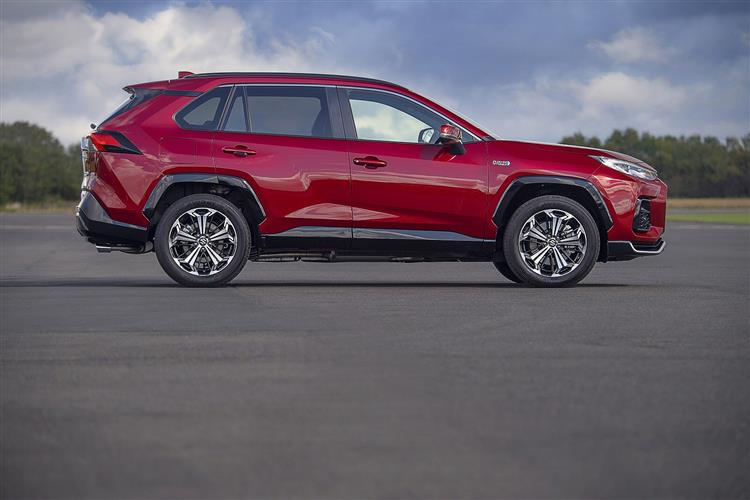
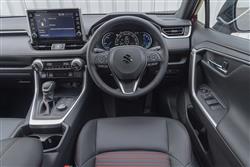
The Across was the grandest, most expensive car that Suzuki had ever offered. It certainly feels surprising to come across the company's badge on the bonnet here, partly because this model is so much larger and pricier than anything else the marque usually sells and partly because so much of the bodywork is exactly the same as that of a Toyota RAV4. The visual changes that were made to set the Across apart from its development stablemate are mostly found at the front, which has much less of a sharky, angular look. The distinct upper and lower grilles of a RAV4 are replaced by a one, large central appendage, which sits above a more prominent lower silvered skid plate panel. The corner cut-outs for the fog lamps are wider and more prominent, while the bespoke bi-beam projector headlamps with their LED daytime running lights are slimmer. At the wheel, it's as smartly finished as the asking price would lead you to expect, but basically unchanged over a RAV4. The only difference is the badge on the steering wheel, through which you view a combination of digital and analogue design. The binnacle's provided 7-inch central display isn't large enough to show anything other than a speedometer, but it does have a useful centre section that can show various drive read-outs. As for the analogue gauges that that flank this display, well there are fuel and temperature needles on the right and a Hybrid system indicator on the left. Everything else is covered off by a 9-inch centre-dash infotainment touchscreen, which covers off the usual DAB audio, Bluetooth and 'Apple CarPlay'/'Android Auto' connectivity options, but (rather appallingly given the asking figure here) lacks navigation. We do though, like the neat 'Energy Monitor' which shows you at any given time what's being charged or powered by what. You also get comfortable seats, good all-round visibility and plenty of cabin storage In the rear, you might be a little disappointed to find that the bench doesn't slide, but the backrest reclines for greater comfort on longer journeys and, despite the low-ish roof line, headroom's good too thanks to a metre between the seat base and the roof. Thanks to this Suzuki's relatively lengthy 2,690mm of wheelbase length, there's also plenty of room for legs and knees - it measures at 720mm with the driver's seat set typically to give the person up front a metre of legroom. There's a little more cabin width than you might expect too, so less chance of a couple of adults digging each other in the ribs. At the boot, you'll be standing clutching your packages for rather a long time as the electrically-operated hatch completes its arthritic perambulation upwards - to eventually reveal a 490-litre capacity, which is actually very good by mid-sized PHEV crossover class standards. And when the rear seat is folded? Well there's no fold-flat front passenger seat option to allow for the carriage of really long items, so you'll need to be satisfied with a very unremarkable 1,168-litres of total capacity up to the level of the tonneau cover. The area provided isn't quite flat but the designers claimed that this car could accommodate a 29-inch mountain bike without any wheels having to be removed.
To see the full road test text contact us on 0330 0020 227
Pictures (high res disabled)
.jpg)
|
.jpg)
|
.jpg)
| |||
.jpg)
|
.jpg)
|
.jpg)
| |||
.jpg)
|
.jpg)
|
.jpg)
| |||
.jpg)
|
|
Scoring (subset of scores)
Category: Hybrid, Plug-in, Electric & Hydrogen
| Performance | |
| Handling | |
| Comfort | |
| Space | |
| Styling, Build, Value, Equipment, Depreciation, Handling, Insurance and Total scores are available with our full data feed. | |