Toyota Corolla - ABC Leasing
FAMILIAR NAME - FINER TECHNOLOGY(some text hidden)
By Jonathan Crouch
Ten Second Review word count: 46
The twelfth generation Corolla hatch and Touring Sports estate models have gained many friends for Toyota amongst family hatch customers wanting full-Hybrid power. Constant updates have kept this 'E210'-series design current and these include detail improvements for the 2026 model year. It's still a strong contender.
Background word count: 211
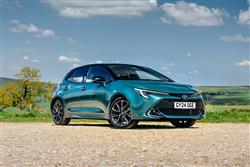
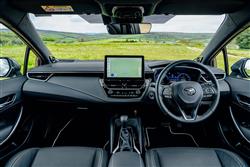
Toyota was aiming to enter fresh territory with this 12th generation Corolla back in 2018 at its original launch. For one thing, it needed to make Hybrids more universally acceptable in this segment - that's why there are two of them with this current model, a 1.8 and a 2.0-litre unit, both of the 'self-charging' non-plug-in variety. This Corolla also aimed to change customer perceptions of Toyota in this sector, which tend to centre around expectations of drab interior quality, forgettable looks and boring drive dynamics. This 'E210'-series model turned out to be a huge step forward from its Auris predecessor in all these areas. But that wasn't quite enough to at last make this Japanese maker competitive at the sharp end of this class amongst Astras and Golfs. The brand is getting closer though, after a big update for this MK12 model in 2023 followed by detail enhancements for the Model Year 2026 design we look at here. As it's always been, this current model is underpinned by the 'TNGA' 'Toyota New Global Architecture' platform and builds on world record sales of more than 50 million Corollas over twelve generations since 1966. As usual, there's a choice of hatch and 'Touring Sports' estate body shapesh. Let's take a closer look.
Driving Experience word count: 276
This current Corolla features the fifth generation of Toyota's full-Hybrid self-charging powerplant and remains available in both 1.8 and 2.0-litre petrol forms. The smaller capacity 1.8-litre unit has more power these days (138bhp) and makes the 0-62mph sprint in 9.1s. Toyota's helped that in recent times by reducing the weight of the hybrid system's lithium-ion battery. In the most recent major update, the engineers improved driveability too by redesigning the power control unit and the transaxle motor. They also recalibrated the hybrid control to provide acceleration feel closer to throttle pedal use, with less of the previous 'rubber band' effect. As before, it all works via CVT auto gearbox with six speeds. Whichever powerplant you prefer, you should find this Toyota dynamically able - far more so than some of its segment predecessors. Throw the car into a corner and you'll find that though this Corolla is no Golf, it far from disgraces itself, with a decent level of front end grip and steering that's predictable and accurate, though rather light. The 2.0-litre variant's obviously the one to choose if you want a little extra performance, this version (with 176bhp) making rest to 62mph in 7.4s (around a second faster than a VW Golf 2.0 TDI). More relevant is the rapid 30-50mph overtaking increment that makes the car feel flexible and spontaneously powerful on faster roads. Don't misunderstand us: a 2.0-litre Hybrid Corolla is still way down on the level of pulling power a black pump-fuelled engine would produce, with a 190Nm figure that's almost 50% less than a comparable 2.0-litre diesel. But you notice the shortfall much less than you do with the 1.8-litre Hybrid.
Pictures (High res disabled)
.jpg)
.jpg)
.jpg)
.jpg)
.jpg)
.jpg)
.jpg)
.jpg)
Scoring
Category: Compact Car
| Performance | |
| Handling | |
| Comfort | |
| Space | |
| Styling | |
| Build | |
| Value | |
| Equipment | |
| Economy | 90% |
| Depreciation | 80% |
| Insurance | 70% |
| Total | 71% |
Mobile
Narrow
Narrower
Normal
Wide