Omoda 5 SHS-H - ABC Leasing
YOUR HEALTHIER FIVE A DAY(some text hidden)
By Jonathan Crouch
Ten Second Review word count: 41
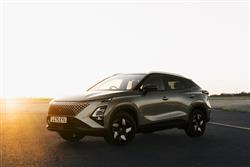
Omoda brings us its first ever full-Hybrid in the form of this car, the Omoda 5 SHS-H. At a stroke, it brings this distinctively styled Chinese compact crossover contender into the orbit of combustion customers who wouldn't previously have considered it.
Background word count: 107
Omoda's very first UK model, the Omoda 5, has sold remarkably well given its original powertrain line-up. This offered a choice between a full-EV, the E5, which was OK but sold in a hesitating market. And a petrol Omoda 5 that performed eagerly but was woefully inefficient. Now though, this growing Chinese brand has bought UK customers the kind of a Omoda 5 they might want in larger numbers - this SHS-H Hybrid version. It's a Omoda's first-ever full-Hybrid and the arrival of this variant has been described as 'a milestone moment' for the brand. But just how good is this car? Let's take a closer look.
Driving Experience word count: 188
The SHS-H ('Super Hybrid System - Hybrid') set-up in use here comes from parent group Chery's parts shelf and pairs a turbocharged 1.5-litre four cylinder petrol engine with a compact electric motor energised by a tiny 1.83kWh battery pack. Some rivals in the segment (the Nissan Qashqai e-Power for instance) work as 'series Hybrids', with drive offered only by an electric motor, the engine provided solely to generate energy for the battery. This Omoda 5 uses a more conventional Toyota-style full-Hybrid system with the engine and motor working in tandem to power the front wheels. That power works through the Cherry Group's own three-speed 'DHT' auto gearbox ('Dedicated Hybrid Transmission') optimised to work with petrol/electric powertrains. Combined power output is rated at 204bhp, with 0-62mph requiring 7.9s en route to 108mph. Handling was developed in Europe and benchmarked against what the brand sees as this car's closest rival the Hyundai Kona. The suspension, steering and anti-roll bars have all been re-tuned over the Chinese market model to cater for differing European tastes. Don't expect cutting-edge handling or particularly feelsome steering but the drive dynamics are reasonably class competitive.
Pictures (High res disabled)
.jpg)
.jpg)
.jpg)
.jpg)
.jpg)
Scoring
Category: Compact Car
| Performance | |
| Handling | |
| Comfort | |
| Space | |
| Styling | |
| Build | |
| Value | |
| Equipment | |
| Economy | 70% |
| Depreciation | 60% |
| Insurance | 60% |
| Total | 68% |
Mobile
Narrow
Narrower
Normal
Wide