
PLUS POINTS (some text hidden) SECTIONED_new_toyotachrplus_2026
By Jonathan Crouch
The C-HR+ is Toyota's most significant EV yet. Jonathan Crouch drives it.
Ten Second Reviewword count: 48
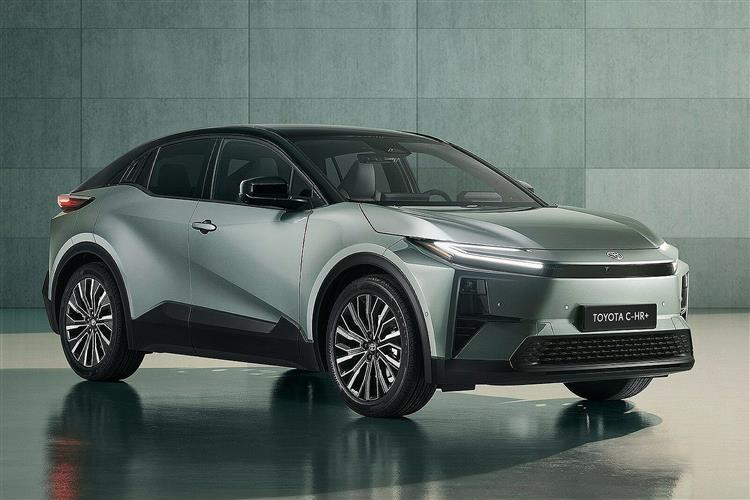
At last, Toyota is broadening its EV range downwards. Here's what looks likely to be the brand's strongest selling electric vehicle over the next few years, the C-HR+. It's actually a stand-alone model and will be a core contender for the company in the electric compact crossover segment.
Backgroundword count: 135
The bZ4X might have been Toyota's first self-developed EV, but this smaller C-HR+ model is considerably more significant. It's based on the brand's bZ Compact SUV Concept car of 2022 and was originally supposed to be called the 'bZ3X' until the company changed its EV naming convention. The C-HR+ slots into the Japanese maker's line-up just below the bZ4X and just above the Urban Cruiser EV Toyota has co-developed with Suzuki. The C-HR+ name suggests a C-HR with an EV powertrain, but actually this EV is a completely stand-alone model - and a slightly bigger car than its Hybrid showroom stablemate. Toyota insists though that the two C-HR models share 'the same DNA' and says that the '+' suffix designates 'added versatility and practicality' as well as the EV drivetrain. Let's take a closer look.
Driving Experienceword count: 278
Things kick off in the C-HR+ range with an entry-level model featuring front wheel drive and a 165bhp motor energised by a 57.7kWh battery pack which gives you 284 miles of range. With that, 0-62mph occupies 8.4s en route to just 86mph. You're far more likely to want the alternative variant we tried, another front driven model, this one with a larger 77kWh battery requiring a perkier 221bhp motor which makes 62mph in 7.3s en route to a 99mph maximum. It's the bigger-battery front driven version you'll obviously need for the best EV range figure - 377 miles. We didn't find the bZ4X model this car is based upon particularly fun to drive, but Toyota engineered the C-HR+ to be more agile, helped in this regard by greater platform rigidity, bespoke-tuned suspension and stiffer anti-roll bars. The company also claims responsive steering; the helm's been mapped for responsiveness, light at lower speeds and more directly-responsive at higher ones. The C-HR+ gets the latest lightweight Toyota eAxle - consisting of inverter, motor and transaxle - with silicon-carbide semiconductors for efficiency and high-power output. There's a firm edge to the ride, but it's not uncomfortable. Refinement's been a priority too. Copious amounts of noise insulation and absorbing materials and silencers have been strategically installed to create a peaceful cabin environment and, broadly, that's what you get, provided you stay beneath the legal limit. There are four levels of regenerative braking, selected using paddle shifters behind the steering wheel. There's no Power or Sport drive mode on offer; but if you want an alternative to the default normal drive set-up, there are buttons to select 'Eco' or 'Snow' drive mode options.
To see the full road test text contact us on 0330 0020 227
Pictures (high res disabled)
.jpg)
|
.jpg)
|
.jpg)
| |||
.jpg)
|
.jpg)
|
.jpg)
| |||
.jpg)
|
.jpg)
|
|
Statistics (subset of data only)
Min |
Max |
|
Price: |
£32,995.00 (At 30 Jun 2026, Icon [inc £1,500 ECG]) |
£39,495.00 (At 30 Jun 2026, Excel [inc £1,500 ECG]) |
Insurance group 1-50: |
33 |
37 |
Max Speed (mph): |
87 (57.7kWh) |
99 (77kWh) |
0-62 mph (s): |
8.4 (57.7kWh) |
7.3 (77kWh) |
Electric WLTP-Rated Driving Range (miles): |
284 |
|
Length (mm): |
4520 |
|
Width (mm): |
1870 |
|
Height (mm): |
1595 |
|
Boot Capacity (l): |
416 |
|
... and 2 other stats available | ||
Scoring (subset of scores)
Category: Hybrid, Plug-in, Electric & Hydrogen
| Performance | |
| Handling | |
| Comfort | |
| Space | |
| Styling, Build, Value, Equipment, Depreciation, Handling, Insurance and Total scores are available with our full data feed. | |