
A DIFFERENT KIND OF LUXURY (some text hidden) SECTIONED_new_lexusls_2018
By Jonathan Crouch
Introductionword count: 28
Lexus reckoned that its fifth generation LS 'reimagined' what a large, luxury boardroom sector saloon should be. And it kind of did, in its own, unique, distinctive way.
Modelsword count: 10
4dr Saloon (3.5 Hybrid 500h) - [standard, Luxury, Premier, Takumi]
Historyword count: 490
With this fifth generation version of its large luxury saloon, the LS, Lexus looked to showcase all it could be. For this final XF50 LS design, there was a non-Plug-in hybrid petrol 3.5-litre V6 beneath the bonnet and the option of AWD for those who wanted it. What wasn't changed was that opulence, refinement and sheer attention to detail still got top billing. Back in 1989, the launch of the original XF10 version of this LS model redefined the luxury saloon segment, the engineers behind it tasked to create nothing less than 'the best luxury car in the world'. Few would argue that they succeeded. It seems rather ridiculous now to remember that back then, the European makers who ruled the flagship four-door market sector defined luxury as being as much about wood and leather as it was about ride and refinement. Thanks to this Japanese brand, cars of this kind were finally transformed from boardroom barges to the technological showcases buyers had a right to expect from their inflated price tags. A MK2 XF20 LS model followed in 1994, a MK3 XF30 version in 2000 and a MK4 XF40 design in 2006. By 2017 and the launch of the MK5 XF50 version we look at here, the LS was still a technological showcase, but it wasn't the obvious segment choice that it had been for a brief period in the early Nineties until the European opposition caught up. The Lexus engineers worked on that through this century's second decade though, and the result was the fifth generation version we're going to look at here, a boardroom sector large saloon that claimed to break new ground in design, technology and performance, extending the boundaries of automotive luxury. That was quite a claim when rivals in this class were as accomplished as the Mercedes S-Class, the BMW 7 Series and the Audi A8. Lexus knew that its contender would be a much more individual choice than competitors of this sort and created this car to suit that remit. Typical LS buyers didn't want the planet-polluting diesel engines that back in 2017 those rival models still prioritised. And they wanted like an interior that was more personal and engaging. So here, cutting-edge hybrid technology and unique Japanese Takumi craftsmanship aimed to provide just that. We were promised a more rewarding driving experience too, despite the fact that for the first time in an LS, there was no V8 option beneath the bonnet. This car did, after all, sit on the same sophisticated GA-L platform as the brand's highly-rated LC coupe. Like that car, it was quite arresting to look at too, the saloon styling featuring a more flowing, coupe-like vibe. Lots to look at then. In this very rare, very unique interpretation of what a modern large luxury saloon really ought to be. It sold in tiny numbers in the UK and was eventually taken off sale in 2025 and not replaced.
What You Getword count: 528
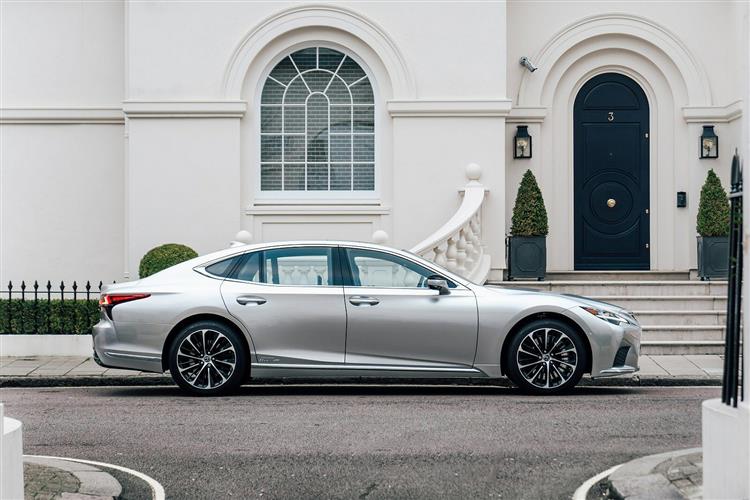
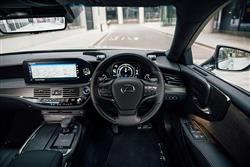
It took five generations and over a quarter of a century of development for Lexus to come up with an LS that had what its German rivals boasted all along: its own visual identity. This one was a departure from its predecessors in its switch from a traditional three-box saloon silhouette to the kind of lower, more sweeping profile you'd expect from a four-door Grand Tourer. A key change with this MK5 XF50 design - and one that Lexus ultimately regretted - was the brand's decision to not to offer the kind of lengthier wheelbase body style that in this period was available from every other main contender in the luxury large saloon segment. The company thought it wasn't needed because this fifth generation LS had a wheelbase already 35mm longer than the stretched version of the previous model. This being a Lexus, the detailing is almost obsessively intricate, especially at the front where this XF50 design's interpretation of the marque's trademark spindle grille represents one of the most complex pieces of automotive sculpture you're likely to find. Inside, there's an interior apparently inspired by 'Omotenashi', the Japanese art of hospitality. The attention to detail is obsessive, reflecting the fact that every LS was signed off by a small team of so-called 'Takumi' specialists. But it isn't just the fit and finish. It's also the opulence of the materials used. Like art-deco wood produced with the help of the people responsible for Yamaha pianos. The stitched dashboard feels unique too, featuring a sweeping array of fixed, horizontal metal fins spanning its full width, neatly concealing the moveable fins that direct airflow from the air conditioning vents. If you can afford more and have the top 'Premier' model, a pricey optional 'Pleat' pack that original buyers could specify from new included a couple of extra finishing touches - delicate Kiriko glass inserts (a little 'Liberace' for our taste) and an equally unique leather pleated door card finish, created using the time-honoured skills of Origami paper folding. There's more unusual design in the distinctive instrument binnacle. An 8-inch TFT screen springs into life with animated graphics at start-up and delivers a circular speedometer layout that changes in colour depending on the drive mode you select. As for the infotainment functions on the centre screen, well accessing these via the maddening provided touchpad is for us still better than having to stab away at a touchscreen, as you'd have to in a rival Jaguar XJ from this period. The big 12.3-inch centre-dash display you control via this pad deals with all the usual Navigation, radio, media, Bluetooth 'phone and climate functions. And the rear? Well the 'Luxury'-spec models most will choose come with standard 18-way rear seat adjustment, while the 'Premier' variant has Shiatsu massage and 22-way adjustment that includes three pre-set seating positions, with all functions selectable via this multi-function touchscreen in the rear central armrest. Finally, let's consider the cargo area. There's just 430-litres of luggage capacity. You can't have split-folding rear seatbacks to extend the boot area either. Still, a couple of sets of golf clubs will of course easily fit. Most owners will be content with that.
To see the full road test text contact us on 0330 0020 227
Pictures (high res disabled)
.jpg)
|
.jpg)
|
.jpg)
| |||
.jpg)
|
.jpg)
|
.jpg)
| |||
.jpg)
|
.jpg)
|
.jpg)
| |||
.jpg)
|
|
Scoring (subset of scores)
Category: Luxury Saloons and Estates
| Performance | |
| Handling | |
| Comfort | |
| Space | |
| Styling, Build, Value, Equipment, Depreciation, Handling, Insurance and Total scores are available with our full data feed. | |