
MORE ASTRA-ZEN (some text hidden) --NONE--
By Jonathan Crouch
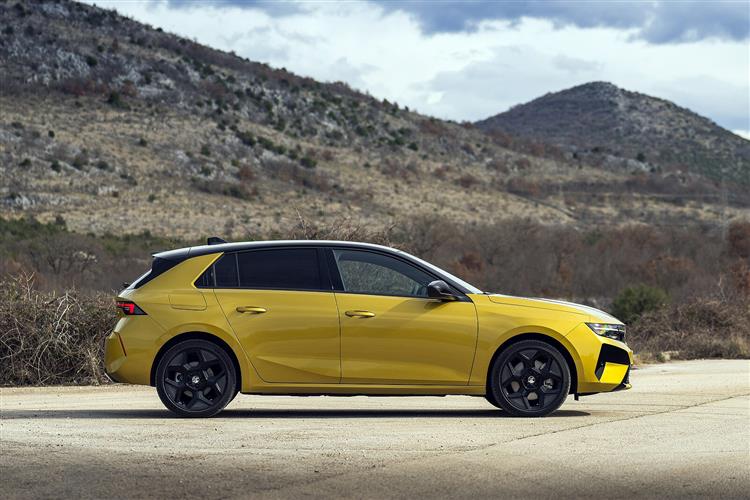
The much improved version of Vauxhall's eighth generation Astra family hatch might just make most sense in this Hybrid e-DCT6 form. Jonathan Crouch takes a look.
Ten Second Reviewword count: 44
The Vauxhall Astra's third electrified powertrain option, showcased by this Hybrid e-DCT6 variant, is probably the best all-round pick if you've decided you really want the Griffin brand's much improved take on its eighth generation family hatch. But there's tough competition in this segment.
Backgroundword count: 121
The Vauxhall Astra has one of the widest selections of electrified powertrains in the family hatch segment. You might be familiar with this car in its Plug-in Hybrid and full-electric forms, but possibly not in this more affordable non-plug-in Hybrid e-DCT6 guise. Like all eighth generation Astras, this variant's been considerably improved in recent times. The e-DCT6 part of this car's moniker designates the core element of this Vauxhall's self-charging Hybrid powertrain, an e-DCT6 six-speed transmission that has an integrated electric motor built into it. It's the same 48V powertrain you can also get in the brand's Corsa and Grandland models, as well as in assorted Peugeots, Citroens and the Jeep Avenger. How well does it suit the Astra? Let's see.
Driving Experienceword count: 211
For this Astra, Vauxhall hasn't bothered offering the lesser 100hp version of this Hybrid engine you can get in the smaller Corsa. So the Turbo Hybrid e-DCT6 model comes only in a single 145PS state of tune. The 48V system is based around the Astra's familiar 1.2-litre three cylinder petrol engine mated to a bespoke 6-speed e-DCT6 dual clutch auto transmission. Bespoke because that gearbox's casing houses the DC inverter, the Engine Control Unit and a little 28hp electric motor powered by a tiny battery secreted beneath the front passenger seat. On the move, the petrol engine and the electric motor can operate together - or separately. And, unlike with a mild hybrid system like that fitted to say, a Golf eTSI, here the car can be driven for short urban distances (under 18mph) on electric power alone. The motor also assists the engine under acceleration - such as from standstill to 62mph, which (helped by 230Nm of torque) takes 9.0s en route to 130mph. Mind you, those figures are only 0.7s faster than the equivalent un-electrified auto derivative. During deceleration, the petrol engine stops and the e-motor acts as a generator to recharge the Hybrid system's 48V battery. The battery also stores the energy recuperated by the regenerative braking system.
To see the full road test text contact us on 0330 0020 227
Pictures (high res disabled)
.jpg)
|
.jpg)
|
.jpg)
| |||
.jpg)
|
.jpg)
|
.jpg)
| |||
.jpg)
|
.jpg)
|
.jpg)
| |||
|
Statistics (subset of data only)
Min |
Max |
|
Price: |
£29,995.00 (At 29 May 2026, GS) |
£33,995.00 (At 29 May 2026, Ultimate) |
Insurance group 1-50: |
20 |
22 |
CO2 (g/km): |
108 (hatch) |
|
Max Speed (mph): |
130 |
|
Combined Mpg: |
58.9 (hatch) |
|
Length (mm): |
4374 |
|
Width (mm): |
1860 |
|
Height (mm): |
1441 |
|
Boot Capacity (l): |
422 |
608 |
... and 2 other stats available | ||
Scoring (subset of scores)
Category: Hybrid, Plug-in, Electric & Hydrogen
| Performance | |
| Handling | |
| Comfort | |
| Space | |
| Styling, Build, Value, Equipment, Depreciation, Handling, Insurance and Total scores are available with our full data feed. | |