
A STRIKING PROPOSITION (some text hidden) --NONE--
By Jonathan Crouch
Can one car really meet all family needs? Dacia thinks this Striker model might. Jonathan Crouch takes a look.
Ten Second Reviewword count: 28
Dacia offers another C-segment family model in the shape of this Striker. A Hybrid which blends various genres in its bid to create the perfect everyday practical package.
Backgroundword count: 148
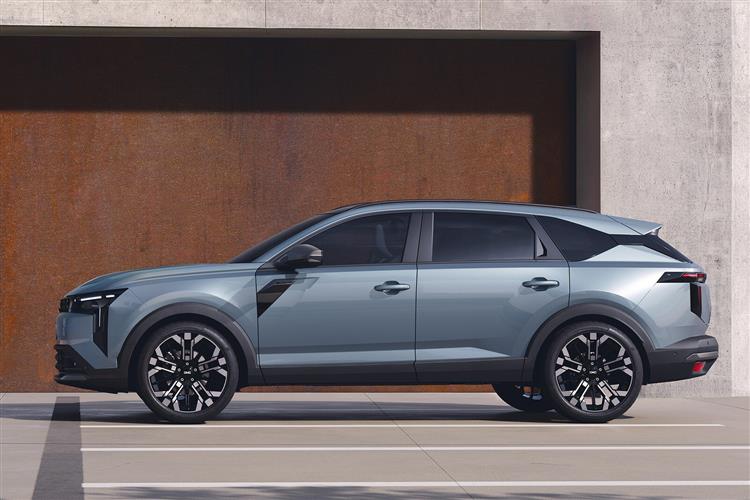
We've heard the claim soften before: a family car that will do just about everything. Renault-owned Romanian maker Dacia is one of the brand's who've used it most frequently, first with the trailblazing Jogger model of 2022, an estate with SUV and MPV genes which has sold well for its maker. And is now joined by car that takes much the same approach in the C-segment above, Dacia's Striker. The Striker - a combustion not an EV model - looks a good deal more SUV-like than the Jogger. Which you'd think might be an issue because the brand has a fully-fledged SUV already selling well in this class, the Bigster. But if you didn't want SUV, you wouldn't buy that car. You might though, like a Striker because the styling blends crossover cues with those of an estate, hatch or even a saloon. Let's take a closer look.
Engines and Tech Specword count: 284
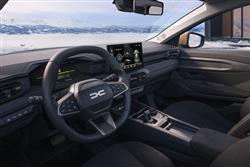
The Striker offers a choice of two Hybrid engines and both are very different. Choose between the 1.8-litre Hybrid 155 and the 1.2-litre Hybrid 150. Confusingly, it's the Hybrid 155 that's the entry-level unit. It's the same 153bhp full-Hybrid four cylinder unit we've seen before in the Duster and the Bigster. It works with an EV motor in the auto gearbox, a 48V starter generator and a 1.4kWh battery that's supposed to be able to power the car for up to 80% of the time at urban speeds. If you want a powertrain better able to allow the Striker to live up to its visual crossover credentials, then you'll be directed to the AWD Hybrid 150. Here there's a 1.2-litre unit offering 148bhp, that total made up of the combined efforts of the engine, the 30bhp rear electric motor and a small 48V front electric motor. It's a part-time AWD system, so the rear motor only engages when it senses a loss of traction - at speeds of up to 87mph. Or you can have that rear motor permanently engaged at crawling speeds, when the rear motor's dedicated 2-speed gearbox gives it great low-down torque at slow speeds and sends 87Nm of constant torque to the rear wheels to keep you moving. Dacia also provides a suite of drive modes, accessed via a circular dial next to the stubby gearstick. These are for different surfaces (Mud, Snow, Sand, Offroad). And there's Hill descent control. The Hybrid 150 has a six-speed auto gearbox and can also drive at urban speeds for up to 80% of the time without using its engine. Other markets get a third LPG powertrain, but we're unlikely to see that here.
To see the full road test text contact us on 0330 0020 227
Pictures (high res disabled)
.jpg)
|
.jpg)
|
.jpg)
| |||
.jpg)
|
.jpg)
|
.jpg)
| |||
.jpg)
|
.jpg)
|
.jpg)
| |||
.jpg)
|
|
Statistics (subset of data only)
Min |
Max |
|
Price: |
£25,000.00 (At 7 Aug 2026, est) |
£28,000.00 (At 7 Aug 2026, est) |
CO2 (g/km): |
100 (Hybrid 155) |
|
Max Speed (mph): |
112 (Hybrid 155) |
|
0-62 mph (s): |
9.7 (Hybrid 155) |
|
Combined Mpg: |
50 (AWD Hybrid 150) |
60 (Hybrid 155) |
Length (mm): |
4620 |
|
Width (mm): |
1820 |
|
Height (mm): |
1530 |
|
Boot Capacity (l): |
600 |
|