
DECEPTIVE 3 STYLING (some text hidden) --NONE--
By Jonathan Crouch
BMW's eighth generation 3 Series is very different - yet in some ways quite familiar. Jonathan Crouch explains.
Ten Second Reviewword count: 47
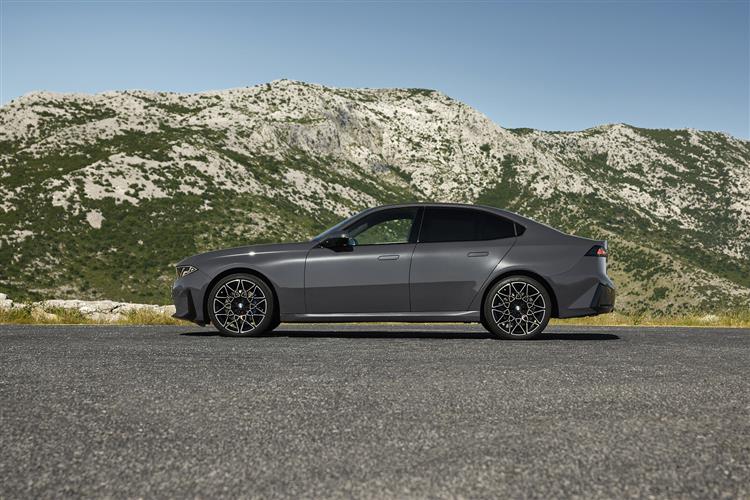
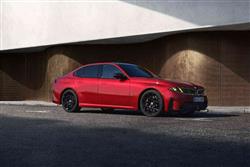
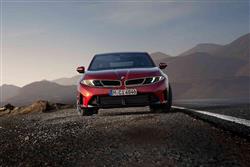
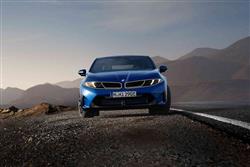
BMW's eighth generation G50-era 3 Series is a combustion model that's packaged like the all-electric i3 EV but under the skin is very different. If you're not quite ready for the BEV switch and still want the segment's ultimate sports saloon, then this is probably still it.
Backgroundword count: 331
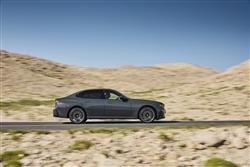
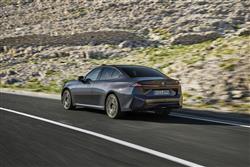
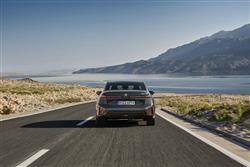
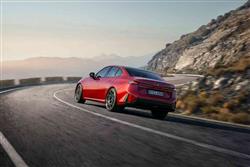
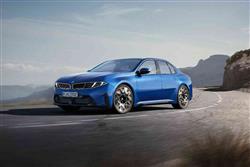
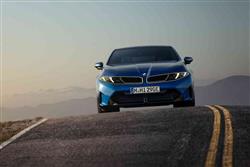
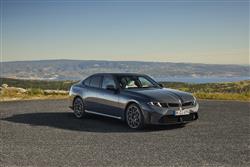
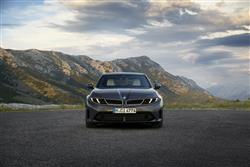
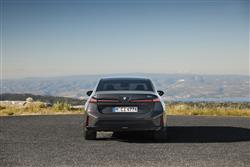
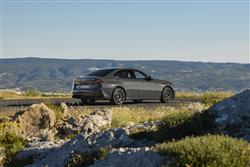
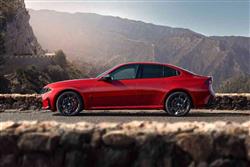
Think of a really sharp handling relatively compact sports saloon and it's probable that you're thinking of a BMW 3 Series. Now in its eighth generation, it gets the Munich maker's Neue Klasse technology, though this time based around combustion power. And the all-new styling shares almost everything with the full-electric i3 model that previewed the look of this latest G50-era design. There's a lot to live up to here. After all, for over fifty years, the 3 Series has dominated the segment it first invented and over 18 million examples have been sold since the first generation E21 model arrived back in 1975. Over the next four decades, subsequent generations came and went (the MK2 E30 of 1982, the MK3 E36 of 1990, the MK4 E46 of 1998, the MK5 E90 of 2004 and the MK6 F30 of 2011). Throughout this time, competition stiffened from this model's two traditional rivals, the Mercedes C-Class and the Audi A4. But for those who liked their driving, there was still nothing quite like BMW's '3'. Electrification has become an increasing theme over the last decade of 3 Series production, the G20 seventh generation model of 2018 introducing mild hybrid tech for the line-up's core four and six cylinder engines and further developing the PHEV drivetrain we'd first seen in 2013. That evolution had to inevitably lead to a full-EV version, which finally arrived in early 2026 badged as the 'i3' with a very different look that heralded the arrival of this almost identically-styled eighth generation 3 Series model. A decade ago when the i3 was being planned, BMW might have expected the EV variant to completely replace combustion 3 Series models by now, but it's become clear since that fossil-fuelled powerplants will continue to attract volume sales for some time yet. So the petrol-powered G50 models launched in Autumn 2026 could hardly be more important to BMW. And under the skin, much is different to the EV version. Let's take a closer look.
Engines and Tech Specword count: 458
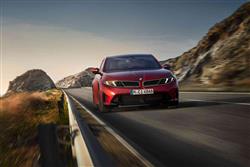
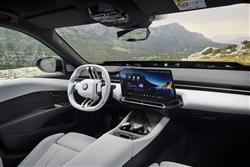
It's appropriate that this generation 3 Series drops the 'i' suffix from its model designation badges. These days with BMW, that letter designates a fundamentally different package of all-electric engineering that this G50 design, for all its EV model exterior packaging, certainly doesn't have. Take the platform in use here, merely a lightly evolved version of the CLAR chassis developed for the previous G20-era model. The mainstream engine, the turbocharged four cylinder 2.0-litre mild hybrid unit of the 320 petrol model, isn't much different from that used in the old model either, though it does now generate quite a lot more power, the output up from 184hp to 211hp, with 330Nm of torque. And it works though much the same eight-speed auto transmission, driving of course the rear wheels, as befits a proper 3 Series. 0-62mph takes 7.4s. There are engineering differences here over what went before, borrowing from the 'Heart of Joy' concept in the i3 where four 'brains' control every aspect of the drive dynamics - much like a conductor leading an orchestra. It's called something different here (the 'driving stack') but the principle is the same. Meaning less wiring, quicker more direct reactions to driver input and extra technology; such as the new 'Motorway Assistant' which (where legal) allows for hands-free driving at up to 81mph. The only other available mainstream 3 Series engine will be a Plug-in Hybrid which is coming later. Unlike other markets, we won't be getting either the entry-level petrol version (the 152hp 318) or the 320d diesel. We do get is a high performance variant fast enough to make some question the need for the forthcoming new-generation M3. The M350 xDrive shoe-horns a 3.0 straight six petrol unit under that expanded bonnet line - also a mild hybrid. The total output, 443hp, is more than the G20-era M3 and a big step up from the old G20 340i xDrive model's 392hp. That's due to new turbos, redesigned intake ports and combustion chambers, different cam timing and smoother exhaust routes. Plus the contribution from the mild hybrid electrical system is increased to 18hp. The result is 580Nm of torque and a 0-62mph time of just 4.1s. For reference, an i3 50 xDrive with 469hp has 645Nm of torque and manages 0-62mph in 4.7s. As for the handling segment benchmark that the 3 Series is always supposed to represent, well BMW has sought to embellish that in all variants with a stiffer chassis, a wider track (front and rear), a tweaked steering ratio and (on the M350) a new 'Drift Moment' feature that forces the car into rear-wheel drive. Even with a humbler 320 variant, if you like your driving, there's nothing else in the segment that will feel quite the same.
To see the full road test text contact us on 0330 0020 227
Pictures (high res disabled)
|
|
| |||
|
|
| |||
|
|
| |||
|
|
| |||
|
|
| |||
|
|
| |||

|
|
Statistics (subset of data only)
Min |
Max |
|
Price: |
£44,975.00 (At 16 Oct 2026, 320) |
£66,785.00 (At 16 Oct 2026, M350 xDrive) |
CO2 (g/km): |
169 (320) |
187 (M350 xDrive) |
Max Speed (mph): |
149 (320) |
155 (M350 xDrive) |
0-62 mph (s): |
7.4 (320) |
4.1 (M350 xDrive) |
Combined Mpg: |
34.5 (M350 xDrive) |
37.7 (320) |
Length (mm): |
4765 |
|
Width (mm): |
1850 |
|
Height (mm): |
1455 |
|
Boot Capacity (l): |
450 |
|
... and 2 other stats available | ||