
HY SOCIETY (some text hidden) --NONE--
By Jonathan Crouch
Introductionword count: 79
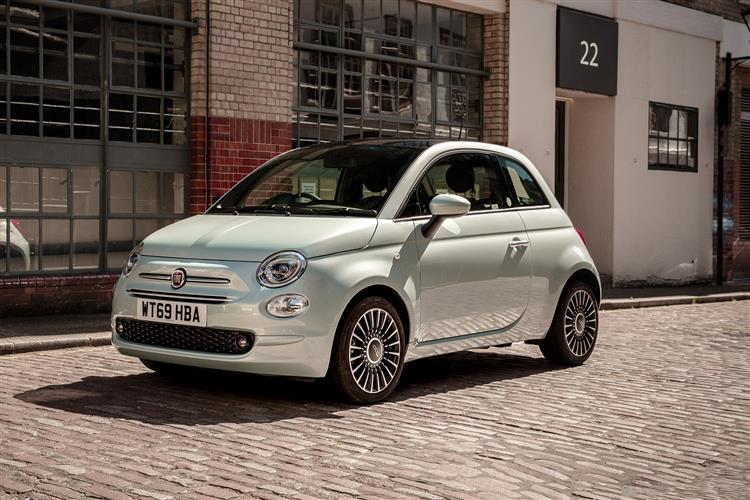
The modern era version of Fiat's cheeky little 500 city car got an extension to its life in 2020 with the addition of mild hybrid electrification to its little 1.0-litre three cylinder engine. Otherwise, this stylish package wasn't fundamentally changed - but then loyal buyers didn't really want it to be. On the used market, these people will like the smart look, the various media options and the very individual feel. You can tell that Fiat knows its market.
Modelsword count: 9
3dr citycar (0.9 petrol [Pop, Lounge, Sport, Star, Rockstar])
Historyword count: 534
If ever a car built its brand, it's the modern-era Fiat's 500 first launched in 2007. There have been three generations of this car over the years and all have been pivotal to Fiat's existence as car maker. This MK2 version though, is the 'Cinquecento' though, that you'll probably most easily recognise, the second generation model, which after 13 years on sale received its most significant update in early 2020 with the introduction of mild hybrid power. It was all part of a move towards electrification which also bought us a more significant milestone in Fiat 500 history: introduction of a completely new third generation full-electric battery-powered version. But that 'New 500' took the brand into a completely new and much pricier market segment that abandoned most of the folk that for the last half century have made the 500 the enduring success story it is. Which is why in 2020, to serve these people, this second generation model not only continued alongside its newer stablemate but was also rejuvenated with a completely new mild Hybrid powertrain. It's a little strange thinking of this 21st century MK2 model as the 'basic' 500 series alternative. Back in 2007, it seemed such a technological marvel in comparison to the 'cinquino' original, the so-called 'Bambino' model which back in 1957 was conceived as an alternative to a scooter. This second generation 500, styled by Frank Stephenson and derived from a 'Trepiuno' concept car first shown in 2004, was, like the Volkswagen Beetle and the Mini, a Fifties peoples' model reinvented as a New Millennial fashion trinket. To great effect. Fiat of course tweaked this second generation design over the years. In 2011, we got a clever TwinAir two cylinder engine that sounded great, but never got near its quoted fuel stats. There was a 1.3-litre diesel variant that was introduced, deleted, then re-introduced again. And in 2015, there was a facelift with over 1,900 changes, most of which you couldn't see, feel or touch. Throughout, buyers were offered the option of either the fixed-top three door hatch model or a '500C' open-topped variant of the same body shape that stopped short of being a full convertible but offered a fabric folding section in its roof. Both body styles were also offered with 1.4-litre turbo petrol power by the Abarth brand - which continued in 2020 but in ever-decreasing numbers. Otherwise, by 2020 the only combustion-powered engine you could get in either the three door 500 hatch or 500C was the mild hybrid unit we look at here, the previous and rather ancient old mainstream 1.2-litre four cylinder petrol unit replaced by this 1.0-litre three cylinder motor paired with a 12-volt belt-integrated starter generator and a separate 11Ah lithium battery, all of which develops a modest 70hp. What's on offer here isn't any sort of full-Hybrid - the car can never drive solely under battery power - but Fiat reckoned this powerplant's clever 12V electrified architecture could reduce CO2 emissions by up to 30%. This car sold until 2024, when it finally had to be deleted due to being unable to meet EU cybersecurity regulations. A 500 Hybrid based on the third generation model was introduced in 2026.
What You Getword count: 499
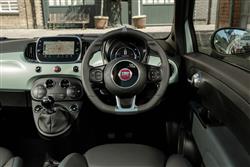
In an age where little hatches often tend to have become rather less little, this one remains appealing small, still measuring in at just 3.5m long, 1.6m wide and 1.5m high, which means it can fit into spaces even a MINI Hatch would have to avoid. If your experience of this car dates to a much older version of this model, it's at the front that you'll notice most of the changes that were made as part of the 2015 facelift. Perhaps most notably, the 'lipstick-kissing' theme of the LED daytime running lights that graphically reproduce the zeros of the '500' name and frame lower corner lamps that take care of dipped-beam headlamp and turn signal duties. Underneath, as before, this car is based on the aging underpinnings of a previous model Fiat Panda, but potential owners rarely know this - and rarely care if they do. Inside, delicious details are everywhere, the coloured fascia panels featuring iconic '500' badging and colour-matched against the bodywork. Nothing changed as part of the evolution into mild hybrid power - unless you count the increased use of recycled plastic to create the restyled seats. It can still feel pretty up to date if the car you're looking at has the initially optional 7-inch TFT instrument cluster and the top version of the 7-inch 'Uconnect' centre-dash touchscreen. Not much changed in terms of getting comfortable. It's still disappointing to find that there's no reach adjustment on the steering wheel, that seat height adjustment is only standard on a top-spec model and that the rear parking sensors you'll really need were optional on many models. It's impossible to be irritated with this car for long though. It's just so engagingly designed; the pool ball-style gear stick mounted high on the dash, the art-deco silver door handles, the ear lobe-style vents around the infotainment screen, the Bakelite-style fitting surrounding the ventilation controls; all of it's fun, trendy and reasonably ergonomic. Given that the external dimensions of this car are so short, you won't be expecting to find much room in the back - and there isn't. Taller folk will find their heads brushing the roof. Larger adults will need to make full use of the elbow cut-outs indented into the side panels. Most though, will find the space provided just about sufficient for two people on short to medium journeys - and it'll probably be fine for kids, who of course are provided for with ISOFIX child seat fastenings. Out back, the boot has a high lip and a narrow opening and remains one of the more compact offerings in the segment. Once you get your stuff in past this tiny parcel shelf though, the 185-litre space provided is no smaller than an ordinary mainstream city car like Toyota's Aygo would give you. If you need to carry more, then you can push forward the rear bench, which split-folds in all but the entry-trim level variant. This frees up 550-litres in this standard hatch model.
To see the full road test text contact us on 0330 0020 227
Pictures (high res disabled)
.jpg)
|
.jpg)
|
.jpg)
| |||
.jpg)
|
.jpg)
|
.jpg)
| |||
.jpg)
|
.jpg)
|
.jpg)
| |||
.jpg)
|
.jpg)
|
|
Scoring (subset of scores)
Category: Small Runabouts
| Performance | |
| Handling | |
| Comfort | |
| Space | |
| Styling, Build, Value, Equipment, Depreciation, Handling, Insurance and Total scores are available with our full data feed. | |