
MORE ROC REVELATIONS (some text hidden) --NONE--
By Jonathan Crouch
Introductionword count: 86
The T-Roc set a more fashionable trend for compact Volkswagen SUVs, representing the brand in the affordable style-conscious end of the fast-growing mid-sized crossover segment. In 2022, five years into its production run, it was lightly updated with a sharper look inside and out, creating the model we look at here. As before, almost everything you can't see on this car comes from a Golf hatch, which is no bad thing. As for the stuff you'll admire in the driveway, well it all looks satisfyingly fashionable.
Modelsword count: 10
5dr SUV (1.0 TSI, 1.5 TSI, 2.0 TSI, 2.0 TDI)
Historyword count: 168
From launch in 2018, the T-Roc provided an entry point to Volkswagen's SUV range, but by 2022 two models, the Taigo and the T-Cross, sat beneath it. So the T-Roc, which unlike those two Polo-based designs rides on the underpinnings of a larger Golf, needed a bit of a spruce-up to justify its continuing place in the range. Hence the mid-term facelift we examine here. With over a million sales on the board by 2022, it was supposed to appeal to customers who wanted something larger than a supermini-based crossover design, but didn't want to stretch up to Volkswagen's mid-sized Tiguan SUV. People who wanted something trendier - which is why the T-Roc also came in Cabriolet and hot hatch T-Roc R forms. By this point though, there was lots of competition for this type of car. So this improved T-Roc needed to be good. The SUV version sold until a second generation model arrived in early 2026. The Cabriolet variant carried on for a couple more years.
What You Getword count: 628
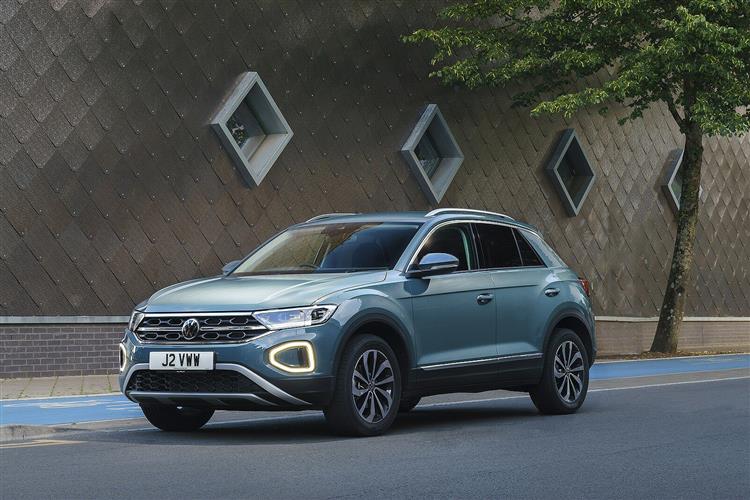
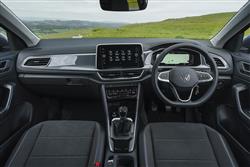
The T-Roc has always sold on its fashionable design and as part of this 2021 mid-term update, Volkswagen didn't tamper with that very much. As before, almost all sales were of the high-riding SUV hatch body style, with a wilder-looking R-Roc R performance version at the top of the range - and there was the continuing option of a Cabriolet body style too. In profile, the things that marked the T-Roc out before mark it out in this updated form - the elongated silhouette with a chrome frame stretching from the A-pillars across the entire roof to the C-pillars, plus a relatively low roofline, short overhangs and a steeply raked C-pillar above meaty-looking rear haunches. Most of the visual changes to this updated model featured at the front, where a revised grille was flanked by new LED headlamps that could feature Volkswagen's intelligent 'IQ.Light' system that used a matrix of 24 LEDs in each headlight module. Further down, the curious corner panels framed by daytime running light strips were re-styled, as was the bumper and the cooling ducts just below it. At the rear, the tail lamps gained brighter LED illumination and darkened lenses, but otherwise, things were much as before. At its original launch in 2018, we found ourselves somewhat disappointed with this T-Toc's cabin - trendy style touches didn't compensate for too many hard plastics and standards of materials quality that felt well below those of a comparably price Golf. When we tried this updated version though, we found ourselves feeling slightly differently. Yes, a Golf interior from this era still feels nicer, but the gap was closed by a general T-Roc cabin upgrade that primarily added a soft-touch foam-cushioned dash-top, smarter door cards and revised switchgear. And in a T-Roc, you don't have to battle with the rather confusing futuristic screen-fest that marks out the cabin of a Golf MK8. You'll want to know what else was new: the smarter steering wheel with its stitched supple leather and capacitive controls; and the 'Digital Cockpit' instrument display screen became standard, supplied either in base 8-inch form or, more usually, in the larger, more sophisticated 10.25-inch 'Digital Cockpit Pro' guise. The glass-fronted middle screen comes in a couple of sizes too - 8-inches as standard, either in base 'Ready 2 Discover' guise or in nav-equipped 'Discover Media' form; or there's the more sophisticated 9.2-inch 'Discover Pro' monitor, which gains extra features including intuitive voice control. So, plenty of effort went into this update. And the stuff carried over from before works well; the trendy body-coloured centre fascia trimming panel; the lightly raised driving position; supportive seats with lumbar support; and generally well-judged ergonomics, though your rear view is compromised by the large C-pillars, so you'll need the standard rear parking sensors. In the back, the room on offer is fine by the standards of space in comparable small crossovers, though that's not saying a great deal. A couple of six-foot passengers can just about sit behind a couple of equally lanky front seat occupants with some degree of comfort but if there's a middle occupant, then he or she will need to sit legs astride the central transmission tunnel. But the doors are big, there are seat back pockets, you get an armrest with twin cup holders and twin UBC-C ports are provided below the centre vents. Boot capacity varies a little depending on the drive layout you've chosen, rated at 445-litres for a front-driven model (17% more than a Golf) or 392-litres in a 4MOTION-equipped 4WD variant. It's a lot less in the Cabriolet version of course - just 280-litres there. The cargo area's a good square shape (seven carry-on suitcases will fit in the front-driven version) and there are the usual tie-downs and bag hooks.
To see the full road test text contact us on 0330 0020 227
Pictures (high res disabled)
.jpg)
|
.jpg)
|
.jpg)
| |||
.jpg)
|
.jpg)
|
.jpg)
| |||
.jpg)
|
.jpg)
|
.jpg)
| |||
|
Scoring (subset of scores)
Category: Crossover or SUV 4x4s
| Performance | |
| Handling | |
| Comfort | |
| Space | |
| Styling, Build, Value, Equipment, Depreciation, Handling, Insurance and Total scores are available with our full data feed. | |