
DOES THE I HAVE IT? (some text hidden) --NONE--
By Jonathan Crouch
Introductionword count: 94
Back in 2018 with their I-PACE, Jaguar became the first of the premium brand manufacturers to make a long range, practical, battery-powered electric vehicle. If you can afford the asking price, you might well have everything you could want here if you want a mid-to-large-sized premium electric sporting SUV from the 2018-2025 period: a claimed near-300 mile WLTP driving range, 400PS, potentially zero emissions and a car that might be as comfortable with high performance driving as it is on a muddy track. But would you want one? You'll certainly need to buy carefully.
Modelsword count: 13
5dr SUV (EV) [S, R-Dynamic S, SE, R-Dynamic SE, HSE, R-Dynamic HSE, Sport]
Historyword count: 187
The idea of an all-electric Jaguar might still be strange, but even stranger is the fact that this British brand was quicker than all its wealthier established German rivals in bringing a car like this to market, the I-PACE launched in the Spring of 2018. Perhaps we shouldn't have been surprised. The Coventry car maker may have a traditionalist reputation but history records that it's never been afraid to innovate when really necessary. Just as it did in an unprecedented post-war period that saw it produce the XK120 sports car; then a string of standard-setting luxury saloons that led to the landmark XJ6 model of 1968. Here, Jaguar aimed to bring to this class of car all the things that the Tesla models of this era didn't have: brand heritage; a history of exemplary drive dynamics; and an understanding of the type of interior environment that older wealthier customers look for. Mind you, close rivals of the time like the Audi e-tron and the Mercedes EQC aimed to offer this too. The I-PACE was updated in 2022. And sold until Jaguar paused from selling cars in 2025.
What You Getword count: 473
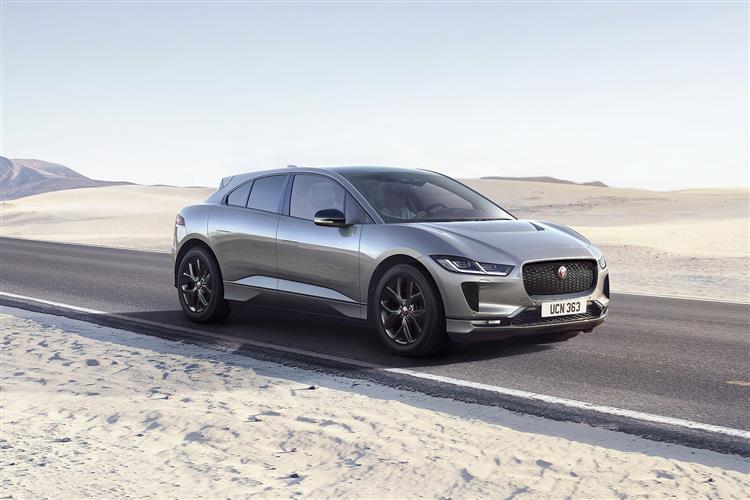
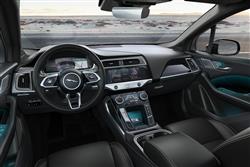
It wasn't only the powertrain of this I-PACE that changed everything we knew about Jaguar back in 2018. The styling too was a radical departure from the brand's established values. We should have expected that. After all, given that there's simply no need here to make space for a whole hunk of metal in the nose, there's also no need for the kind of 'long bonnet - short-boot' proportions that until the I-PACE arrived, characterised virtually every successful Jaguar model in history. It's also a shape that's dimensionally difficult to get your head round. You expect an SUV with this kind of luxury and this kind of price tag to be BMW X5 or Porsche Cayenne-sized. Well this one isn't - yet kind of is. Its roadway footprint is actually 50mm shorter than that of a Jaguar F-PACE in the next class down. Yet the I-PACE has a wheelbase 116mm longer than its showroom stablemate so as to free up the kind of interior space common from the next class up. When it's time to take a seat inside, you sit high up (150mm higher than in an E-PACE for instance) because of all those batteries beneath the floor - but of course that's what you want in a large SUV. It's an interestingly designed, classy, hi-tech cabin, though you might find fault with some of the trimming features if you've bought in at the upper end of the I-PACE line-up. Perhaps inevitably given the current luxury trend and the fact that this is an EV, there are lots of screens, a configurable 12.3-inch TFT display for the instrument cluster and, for the centre of the dash, the JLR 'Touch Pro Duo' set-up. This gives you a 10-inch upper screen for all the infotainment functions - navigation, music, telephone, smartphone-mirroring and so on. And a 5-inch lower screen that deals with all the climate controls and incorporates a couple of rotary dials that can be yanked or prodded to control fan speed or heat levels. The seats are smart and supportive and there's plenty of interior storage space. In the rear, there's far more leg room than the external dimensions lead you to expect - 890mm of it to be exact. Head space is generous too; there's 968mm of it even with the huge glass panoramic roof fitted. Incidentally, this absorbs UV light, so there's no need for a blind. As for cargo space, well there's a compartment under the bonnet but since that's only 27-litres in size, we'll focus on the boot area. Avoid entry-level trim and you get a powered tailgate, which rises to reveal a luggage bay with a modest 'dry' item capacity that Jaguar quotes at 505-litres. Fold down the rear bench (which unfortunately is only available in 60:40-split form) and 1,163-litres of 'dry' item capacity is freed up.
To see the full road test text contact us on 0330 0020 227
Pictures (high res disabled)
.jpg)
|
.jpg)
|
.jpg)
| |||
.jpg)
|
.jpg)
|
.jpg)
| |||
.jpg)
|
|
Scoring (subset of scores)
Category: Hybrid, Plug-in, Electric & Hydrogen
| Performance | |
| Handling | |
| Comfort | |
| Space | |
| Styling, Build, Value, Equipment, Depreciation, Handling, Insurance and Total scores are available with our full data feed. | |