
MORE THE PERFECT 7? (some text hidden) --NONE--
By Jonathan Crouch
Introductionword count: 67
Just as the dinosaurs evolved to suit a changing planet, so have large luxury SUVs - Audi's enormous Q7 more than most. In 2024, we got a further lightly improved version of the second generation model, complete with a slightly smarter look. It was a large luxury 7-seat SUV that aimed to work smarter rather than harder and remained a difficult option to ignore in its segment.
Modelsword count: 17
5dr SUV (3.0 TDI, 3.0 TDI e-tron, 3.0 TFSI, 3.0 TFSI e [SE, Sport, S line, SQ7])
Historyword count: 188
Ever since the original version first generation Q7 was first launched in 2007, it's been a vehicle that middle-England families have always rather liked but, if truth were told, felt a bit awkward about owning, the MK1 Q7's sheer size, power and weight hardly in keeping with its eco-conscious times. The MK2 model, launched in 2015, then revised in 2019, improved things, thanks to a lighter platform shared with premium brands like Bentley and Porsche. But this car was still a huge thing. And remained that way in the further improved form we look at here, launched in early 2024. By that time, with Mild Hybrid engines the Q7 was claiming to have a better eco-footprint, enabling potential customers to consider one with a clearer conscience. Which was nice because for many - ourselves included - there remained something tantalisingly tempting about this big Audi. The way it dominates the road as it'll dominate your driveway. You'll want to justify buying one - but will you be able to? The MK2 Q7 sold in this form until early 2026, when it was replaced by a third generation model.
What You Getword count: 527
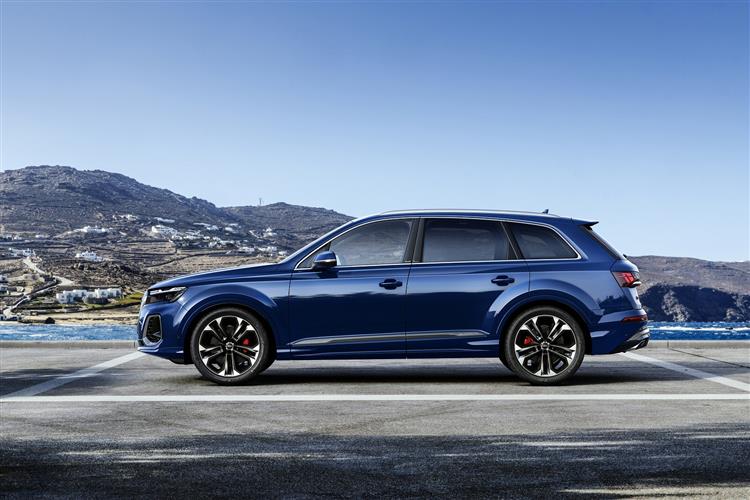
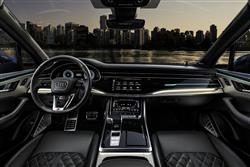
By 2024, we'd already had one update of this second generation Q7 (in 2019), so in creating this further nip and tuck, Audi had to think a bit harder. The brand said it had 'reduced the decorative elements' for 'a cleaner look'. This car certainly gained a bit more overtaking presence. Not much changed from the side - unless you count the restyled alloy wheels, which were available in sizes up to a huge 22-inches. The smallest rims available were 20-inchers. As you'd expect with a facelift, all the main changes featured at the front, with smarter bumpers and some lighting upgrades. Audi hoped the higher position of the daytime running lights would give this updated Q7 a wider, more expressive look. Not much changed behind the wheel. Not much needed to. Audi told us that there were fresh trim, leather and stitching options and if you owned an earlier version of this MK2 design and look closely, you'll note that the screen tech here features updated software and graphics. Otherwise, Audi's so-called 'luxury lounge' cabin architecture remained as before. You're going to need to like screens because the gloss black-panelled layout incorporates no fewer than three of them, the two you'll notice first powering up as soon as the door is opened and dominating the upper and lower parts of the shiny centre stack. Let's consider the second row, access to which is helped by a large door aperture. Passengers here benefit from Audi's standard 'rear bench seat plus' package, which gives you three individual seats each featuring 110mms of longitudinal travel, so that they can be pushed forwards or backwards to maximise either legroom or the space behind. Plus the outer backrests recline through 16 increments for greater comfort on longer journeys. OK - what about third row functionality? You won't necessarily get it on a Q7. A five seat-only configuration is conditional if you go for the plug-in TFSI e versions of this model. There's no magic worked on the available standards of leg room you get once you're back here though and for any kind of comfort here as an adult, you're going to need to ask those in the middle row to push their seats forward a bit. Still, it's really intended for kids - of any age. This is one of the very few 7-seat cars we've tested with ISOFIX child seat fastenings fitted to its third row seats, so Audi gets a big tick for that. Finally, let's consider luggage space. As you'll discover when the powered tailgate rises, as usual with large SUVs in this segment, there isn't much of it on offer when all three seating rows are in place - just 295-litres of capacity. Most of the time of course, you'll probably be running the car with the third row chairs folded down. Buttons are provided for the electrical retraction process both in the cargo area and on each side of the car behind the second row. Once everything's flat, there's a lot of room to play with, 780-litres to be exact in a standard model. Or 563-litres in the five seat-only plug-in hybrid TFSI e variants.
To see the full road test text contact us on 0330 0020 227
Pictures (high res disabled)
.jpg)
|
.jpg)
|
.jpg)
| |||
.jpg)
|
.jpg)
|
.jpg)
| |||
.jpg)
|
.jpg)
|
.jpg)
| |||
.jpg)
|
|
Scoring (subset of scores)
Category: Crossover or SUV 4x4s
| Performance | |
| Handling | |
| Comfort | |
| Space | |
| Styling, Build, Value, Equipment, Depreciation, Handling, Insurance and Total scores are available with our full data feed. | |